Call for Price: 0086-15515573212

What Is the Best Carton Wrapping Machine in China?

Choosing the best Carton Wrapping Machine in China depends on the cartons, the wrapping material, and the pace of your production line. A machine that handles sturdy, uniform boxes may struggle with mixed sizes or uneven loads. Look closely at sealing consistency, changeover time, operator access, and spare-parts support. These details matter on a busy shift. A neat sample carton is not enough.

For a source-backed perspective, this introduction needs a verified quotation from a named industry specialist. Use a confirmed expert’s name and exact words here: “[Insert a directly sourced quotation about Carton Wrapping Machine selection or performance].” Do not publish an invented attribution. That small check protects the article’s credibility.

This guide compares practical factors buyers can inspect: wrapping tension, film use, line speed, adjustment range, and maintenance access. Imagine changing from a short carton to a tall one. How quickly can the operator reset the guides? Can the machine wrap securely without crushing the corners? Those are useful questions. And sometimes the brochure leaves them unanswered.

China offers machines across different capacities and levels of automation, so the “best” choice is not always the fastest model. A careful buyer should request a demonstration using representative cartons and review service arrangements before deciding. Even then, performance on a test line may differ from a full production shift. That deserves attention. The sections ahead explain how to assess these trade-offs and match equipment to real operating needs.
What Is the Best Carton Wrapping Machine in China?

How Carton Wrapping Machines Work

How Carton Wrapping Machines Work

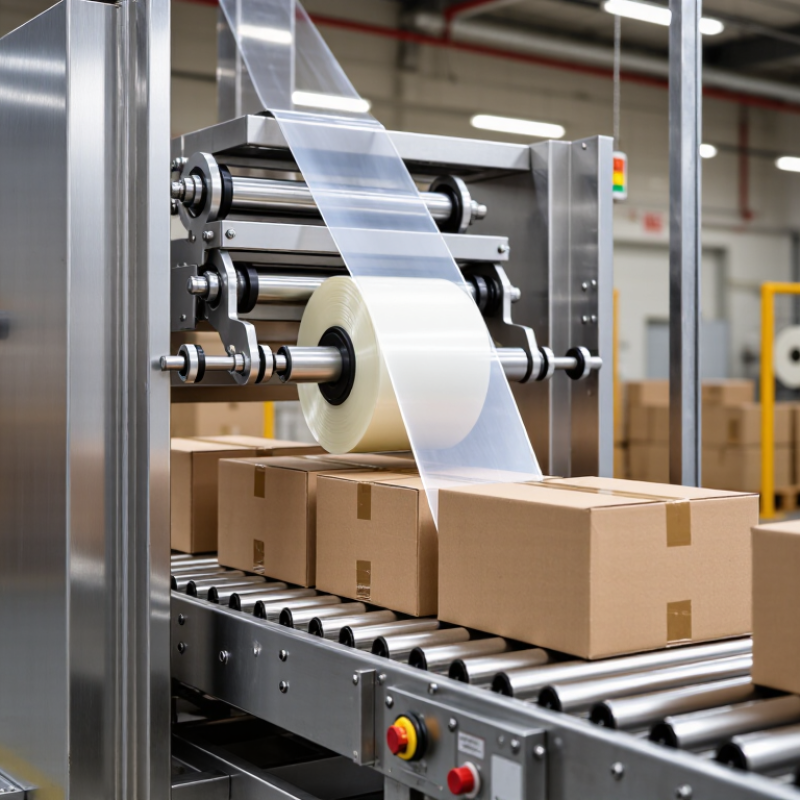
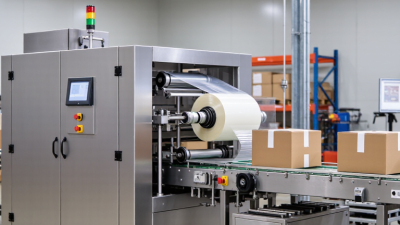
A carton wrapping machine feeds a box into position and applies stretch film around its outside. The carton moves along a conveyor, where guides help keep it centered. Sensors detect its size or presence, depending on the machine’s design. A film carriage then travels around the carton, or the carton rotates while film is applied. The exact movement varies by model.

Film tension matters. Too little can leave loose layers that snag during handling; too much may crush a light carton or distort its corners. The machine overlaps each pass to help secure the load, then cuts and holds the film end. Operators usually adjust film tension, overlap, and conveyor speed for the carton’s size and weight. Setup takes testing. Even experienced teams can miss a weak corner on the first run, so inspect sample cartons before production.

Tips: Use cartons with firm, dry surfaces, and check that flaps are fully closed. Keep film rolls aligned and inspect the cutter and rollers regularly. If cartons vary widely in size, test each size range; one setting may not suit them all. A quick check of wrapped corners can reveal problems before a full shift begins.
Which Types of Carton Wrapping Machines Are Made in China?

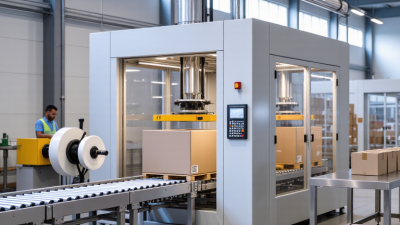
Chinese manufacturers produce several distinct carton-wrapping machine types. Stretch-film pallet wrappers secure stacked cartons on a turntable, rotary arm, or ring system. Turntables suit stable, moderate-volume loads; rotary arms keep tall or lightweight stacks still. Ring systems can wrap quickly, but need suitable floor space and load dimensions. That distinction matters.

For individual cartons or grouped packs, shrink-wrapping machines apply film and pass products through a heated tunnel. Horizontal orbital wrappers instead rotate film around long or irregular loads, such as bundled boards or pipes—not ordinary sealed cases. Some lines combine carton forming, taping, and pallet wrapping, though these are separate operations. Check what “wrapping” means in a supplier’s specification.

Automation is expanding the choices. The International Federation of Robotics’ World Robotics 2024 report recorded 276,288 industrial robot installations in China in 2023, about 51% of global installations. This figure covers all industries, not carton wrapping alone, but it signals a broad automation base. Ask for verified cycle speed, film use per pallet, and samples using your carton sizes. A small caveat: catalogue speeds rarely reflect mixed cartons, frequent changeovers, or real operator pauses.

What Features Define a High-Quality Carton Wrapping Machine?

A high-quality carton wrapping machine delivers consistent protection, not just a fast cycle. Check whether it handles your carton sizes without crushing corners or leaving loose film. Ask for measured output, changeover time, and film use on your own cartons. PMMI’s 2023 Future of Packaging and Processing report found that 88% of consumer packaged goods companies and equipment manufacturers expect sustainability to affect packaging. That makes adjustable film tension and compatibility with suitable recyclable materials practical evaluation points.

Reliable machines also need accessible controls, clear fault messages, and guarding that supports safe operation. Test the machine with cartons that vary slightly in weight and dimensions; real production is rarely perfect. Inspect wrapped cartons for torn film, shifting loads, and blocked labels. A polished showroom run is useful, but it cannot prove long-term uptime. Review maintenance access, spare-parts lead times, and documented safety risk assessments before comparing offers.

Tips: Bring your actual cartons and film to a factory acceptance test. Record output, film use, and changeover time. If results are inconsistent, ask for another run; one successful sample is not enough.

What Is the Best Carton Wrapping Machine in China?

Key features that define a high-quality carton wrapping machine

The chart uses an illustrative 1–5 evaluation rubric, not independently measured product or brand data. Consistent wrapping, dependable sealing, format flexibility, film efficiency, and operator safety are practical criteria to assess when comparing machines.

How Chinese Carton Wrapping Machines Compare in Performance and Cost

When comparing Chinese carton wrapping machines, purchase price is only one part of the decision. Compare verified output, carton-size range, film use, changeover time, and service response. A useful test runs your actual cartons for a full shift. Watch the film tension at corners, count damaged cartons, and record stoppages. Small details matter.

China’s automation base is substantial: the International Federation of Robotics’ World Robotics 2024 report says China installed 276,288 industrial robots in 2023, 51% of global installations. That figure describes the wider industry, not the quality of any individual wrapping machine. Be careful with broad claims. Request a factory acceptance test using your carton sizes and target speed, then compare spare-parts, training, shipping, and maintenance costs over several years. A cheaper machine may need more operator attention. Not always. Calculate cost per accepted carton, not just cartons per minute, and ask for the test conditions behind every quoted performance figure. One point is easy to miss: a neat demonstration may not reflect a long production shift.

What Is the Best Carton Wrapping Machine in China? - How Chinese Carton Wrapping Machines Compare in Performance and Cost

Machine Type Best-Suited Carton Application Typical Performance Labor and Automation Relative Equipment Cost Key Considerations
Manual stretch wrapping Occasional wrapping of cartons stacked on pallets; low-volume dispatch areas. Output depends mainly on the operator, load size, and number of film layers. High manual involvement; no powered wrapping cycle. Lowest Low initial investment, but wrapping consistency and operator effort can vary.
Semi-automatic turntable stretch wrapper Palletized cartons in small- to medium-volume operations. A powered turntable applies film around a stationary load; cycle time varies with load height and wrap settings. An operator loads and unloads the pallet and typically attaches and cuts the film. Low to medium A common step up from hand wrapping; check pallet dimensions, load weight, and turntable capacity.
Automatic turntable stretch wrapper Regular palletized-carton production with a conveyor or integrated handling line. Automates more of the wrapping cycle; line output depends on conveyor speed, load handling, and film program. Lower routine operator involvement; requires compatible infeed and outfeed handling. Medium to high Best assessed as part of the complete line, including guarding, controls, and conveyor integration.
Rotary-arm stretch wrapper Tall, light, or less stable carton loads that may be difficult to rotate on a turntable. The load remains stationary while the wrapping arm rotates; suitable for loads that should not be spun. Available in semi-automatic and automatic configurations. Medium to high Confirm the maximum load height and weight, floor space, and required production-line connection.
Horizontal orbital stretch wrapper Long or grouped cartons, such as bundles moving horizontally on a conveyor. Applies stretch film around the product as it passes through a rotating ring; not intended as a substitute for pallet wrapping. Can be integrated with conveyors for continuous operation. Medium to high Match the ring opening and conveyor design to the carton or bundle dimensions.

Cost levels are relative comparisons, not quoted market prices. Actual purchase cost and output vary by machine configuration, load dimensions, automation, safety features, and integration requirements. For palletized cartons, a semi-automatic turntable wrapper is often a practical starting point; automatic or rotary-arm systems may be a better fit for higher-throughput lines or unstable loads. Confirm specifications and request a test using representative cartons and pallets before purchasing.

How to Choose the Right Machine for Your Packaging Line

Choose a carton wrapping machine for your cartons, not its advertised speed. Measure the smallest and largest boxes, including loaded weight and corner strength. Check whether the machine handles mixed sizes without frequent manual adjustment. A line wrapping uniform cartons has different needs from one handling irregular batches. Real production varies.

Decide how cartons will be secured: with stretch film, shrink film, or another wrapping method. Each affects equipment, material use, and handling. Ask suppliers to run a trial with your cartons and packaging materials. Watch for film tears, loose ends, crushed corners, and awkward operator reach. Small defects matter. A fast cycle is less useful if workers must stop and reset the film every few minutes.

Check floor space, conveyor height, power supply, and connection points before ordering. When sourcing from China, confirm the control language, spare-parts list, commissioning support, and response times in writing. Request cycle data for stated carton dimensions instead of relying on a brochure figure. One point is easy to miss: a successful test with one box size does not prove every format will run equally well.