Why Choose a Cellophane Packaging Machine?
Packaging decisions now influence product protection, shelf appeal, labor costs, and environmental expectations. Smithers’ The Future of Global Packaging to 2028 reports continued growth in packaging demand, driven by food, confectionery, personal care, and premium consumer goods. Its findings suggest that manufacturers need equipment offering both presentation quality and operational efficiency.
A Cellophane Packaging Machine can create neat, transparent wraps around boxes, cartons, gift packs, and individual products. The film tightens around sharp edges. Seams look clean. Product visibility remains strong. These details matter on crowded retail shelves. PMMI’s 2024 State of the Industry report also identifies automation, labor availability, and production efficiency as major concerns for packaging manufacturers. A reliable wrapping machine may reduce repetitive manual work and improve output consistency.
The product still needs care.
Mike Ferrari, founder of Ferrari Innovation Solutions and a recognized packaging innovation specialist, has said, “Packaging is the only medium that touches the product.” His observation explains why sealing quality, film selection, and machine adjustment deserve close attention. Poor tension can cause wrinkles. Excessive heat may damage sensitive materials. A faster machine is not automatically the better machine.
This guide examines machine speed, compatibility, maintenance, sustainability, and total ownership cost. It also considers a practical limitation: cellophane packaging may not suit every product or production environment. Real results depend on package dimensions, film grade, operator skill, and quality control. Choosing carefully can turn transparent wrapping from a decorative step into a measurable production advantage.
What Is a Cellophane Packaging Machine?
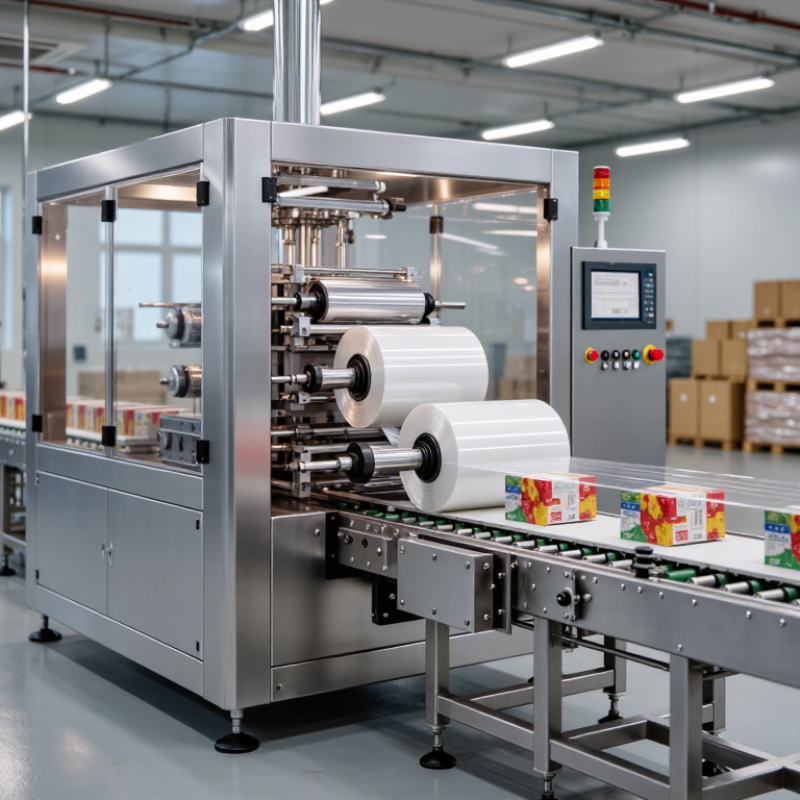
A cellophane packaging machine is an automated system that wraps products with transparent cellulose film. It feeds the film from a roll, folds it around the product, then seals and cuts the package. Common units include film unwinding, folding, heat-sealing, cutting, and speed-control mechanisms. Some machines also add date coding or product counting functions.
The film choice needs careful verification. True cellophane is cellulose-based, while clear plastic films can look almost identical. Some cellulose films include coatings, so their compostability depends on the coating and local facilities. That distinction matters. European Bioplastics’ 2024 market data report estimates global bioplastics production capacity at 2.47 million tonnes in 2024. It projects capacity to reach 5.73 million tonnes by 2029, showing growing interest in bio-based packaging materials.
For operators, the machine’s value comes from repeatable wrapping and fewer manual handling steps. A well-adjusted system can maintain neat folds around small boxes, soap bars, or confectionery packs. It may also reduce film waste through controlled feeding and cutting. UNEP’s Turning off the Tap report states that packaging represents about 40% of global plastic use. However, automation alone does not make packaging sustainable. Incorrect film tension can cause wrinkles, broken seals, and unnecessary waste. I have seen efficient equipment perform poorly when film storage, humidity, or product dimensions were ignored. The machine is only as reliable as its setup, maintenance, and material selection.
| Data Dimension | Typical Data or Range | What It Means | Why It Matters |
|---|---|---|---|
| Primary Packaging Method | Automatic overwrapping or flow wrapping | The machine forms a cellulose-film wrap around an individual product or product group. | Provides consistent wrapping, folding, sealing, and product presentation. |
| Film Material | Regenerated cellulose film, commonly called cellophane | Cellophane is produced from cellulose and is distinct from petroleum-based plastic films. | Supports packaging designs that prioritize cellulose-based renewable materials. |
| Typical Film Thickness | Approximately 20–40 micrometres, depending on the film specification | Film thickness influences stiffness, tear resistance, transparency, and machine handling. | The film must match the machine’s feeding, folding, and sealing settings. |
| Common Machine Speed | Approximately 30–150 packs per minute for many small and medium-format systems | Actual output depends on product size, film type, package style, and operator settings. | Helps determine whether the equipment is suitable for manual, batch, or continuous production. |
| Suitable Product Types | Confectionery, bakery items, soap bars, candles, gift products, and small retail goods | The machine is generally used for products with stable shapes and manageable surfaces. | Improves package uniformity for products that require an attractive retail presentation. |
| Package Appearance | Transparent, glossy, and tightly folded presentation | Clear cellulose film allows the packaged product or printed design to remain visible. | Enhances shelf visibility while creating a neat and consistent finish. |
| Moisture Resistance | Depends on whether the cellulose film is coated or uncoated | Uncoated cellophane has limited moisture resistance; coated grades provide improved barrier performance. | Film selection is essential for products exposed to humidity, grease, or condensation. |
| Sealing Options | Heat sealing, adhesive sealing, or mechanical folding, depending on film construction | Not every cellophane film is heat-sealable; some require a sealable coating or another closing method. | Matching the sealing system to the film prevents open seams and production waste. |
| Environmental Characteristic | Cellulose-based and biodegradable under suitable conditions | The end-of-life result depends on coatings, inks, additives, local facilities, and applicable standards. | Can support packaging strategies focused on renewable and lower-plastic material choices. |
| Material Efficiency | Controlled film feeding with adjustable overlap and cutting | Automated settings help maintain repeatable film consumption for each package. | Reduces variation in package size and may lower avoidable film waste. |
| Automation Level | Semi-automatic to fully automatic configurations | Systems may include automatic feeding, film unwinding, cutting, wrapping, sealing, and discharge. | Allows the equipment to be selected according to labor availability and production volume. |
| Changeover Requirement | Adjustments are normally needed for different product dimensions and film widths | Changeover may involve guides, forming components, cutting settings, and sealing temperature. | Faster and simpler changeovers are valuable for varied product lines. |
| Main Selection Criteria | Product dimensions, required speed, film structure, seal method, and package appearance | Machine performance depends on the interaction between the product, film, and wrapping process. | Evaluating these factors helps avoid poor seals, film tearing, inaccurate folds, and unnecessary downtime. |
Note: The figures shown are typical planning ranges rather than guaranteed machine specifications. Actual performance depends on the equipment configuration, product shape, film grade, coating, package dimensions, and operating conditions.