Top Grain Semi Trailer Manufacturers in China
Choosing a Grain Semi Trailer manufacturer in China requires more than comparing prices or polished product photos. Buyers need to examine payload ratings, body dimensions, unloading systems, axle configurations, and compatibility with their tractors. Small details matter. A hopper’s slope, weld finish, and access points can affect daily loading and cleaning. These features should be checked against the intended grain type, route, and operating conditions.
This guide introduces Chinese manufacturers and the factors buyers can use to assess them. “Top” does not mean the same thing for every fleet. One operator may value customization, while another needs consistent production, clear technical documents, or responsive after-sales support. Ask for current specifications, inspection records, material details, and references for comparable trailers. Where possible, review the trailer in person or request a detailed inspection video. It helps, but it is not a substitute for independent verification. Manufacturer claims should be confirmed before purchase, especially when comparing load capacity and component brands. Product availability and specifications can change, so confirm details directly with each supplier. The right choice depends on real working needs—not just a brochure.
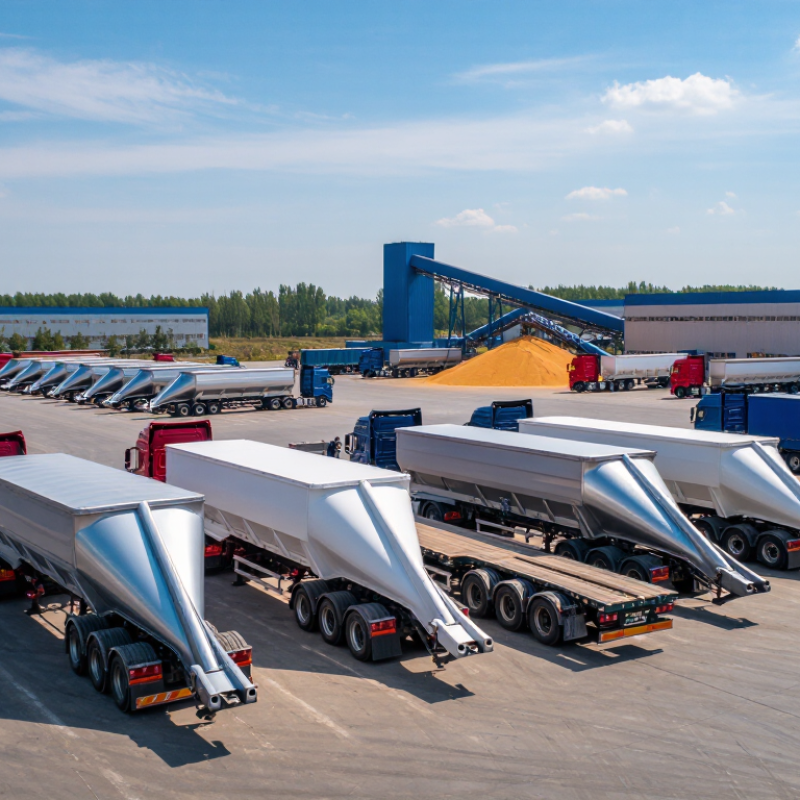
Overview of China’s Grain Semi-Trailer Manufacturing Industry
China’s grain semi-trailer manufacturing industry combines steel fabrication, vehicle engineering, and practical transport requirements. Manufacturers commonly build different body styles, including sidewall trailers and tipping designs, to suit grain handling methods. Production may involve cutting and welding steel panels, fitting axles and suspension, and checking hydraulic systems where a tipping body is used. The details matter. A poorly sealed joint can let rain or dust reach a load.
The industry serves varied operating conditions, from paved highways to rough agricultural access roads. Buyers often compare payload capacity, body dimensions, tare weight, and ease of cleaning. A lighter structure may increase usable payload, but overly thin panels can dent during loading. There is no perfect balance. Buyers should review drawings, material specifications, weld quality, and inspection records rather than rely on appearance alone.
Manufacturing capacity and customization options can differ between suppliers, even within the same market. Clear communication about grain type, loading equipment, route conditions, and maintenance access helps shape a suitable specification. A detail is easy to miss: hinges, seals, and discharge points need routine attention. Buyers should also confirm that stated performance figures are supported by documentation and practical testing. Industry progress is real, but consistency still deserves scrutiny.
China’s GB 1589-2016 sets maximum semi-trailer lengths by axle configuration: 12.0 m for single-axle, 13.0 m for two-axle, and 13.75 m for three-axle trailers. These are regulatory limits, not typical product dimensions; actual permitted vehicles must also meet applicable width, height, and other requirements.
Common Grain Semi-Trailer Types and Their Uses
Grain semi-trailers serve different loading and unloading needs. An open-top, high-side trailer carries loose grain from farms or collection points. Its broad opening allows fast loading by conveyor or loader. A fitted tarp helps keep out rain and road dust during transport. A small tear matters. Grain can absorb moisture quickly, so tarp condition and secure fastening deserve regular checks.
Enclosed grain trailers protect cargo more fully and suit longer routes or changeable weather. Depending on their design, they may unload through bottom hoppers or rear doors. Hopper outlets can make discharge controlled and efficient at suitable receiving sites. Check that gates close evenly and seals are intact; leftover kernels can collect around corners and complicate cleaning. Capacity alone is not enough.
Tipper-style grain trailers raise the body to discharge into a pit or receiving area. They can be useful where compatible unloading equipment is available, but the raised load needs stable, level ground. That detail is easy to underestimate. Before choosing a type, consider grain volume, route length, loading equipment, unloading access, and cleaning routines. A trailer that works well at one depot may slow operations at another, so actual site conditions should guide the decision.
Key Features of Leading Chinese Manufacturers
Leading Chinese grain semi-trailer manufacturers compete on practical engineering, not just payload claims. A well-built trailer uses a stiff, lightweight chassis and a grain-tight body with smooth internal seams. These details help limit residue and make cleaning easier between loads. FAO estimates that 13.2% of food was lost between harvest and retail in 2021. That global figure is not specific to grain transport, but it shows why careful handling matters. Small details matter. Inspect welds, seals, and discharge gates closely; a narrow gap can trap kernels or admit moisture.
Reliable manufacturers also document material grades, axle ratings, braking tests, and quality checks. Ask for test records, not only a brochure. For daily use, operators should check whether the hopper angle supports steady unloading and whether gates remain accessible when the trailer is dusty. Corrosion-resistant coatings help, but poor surface preparation can still lead to early rust. No design is perfect. Buyers should compare tare weight, rated capacity, and maintenance access under the same operating conditions. Custom options may fit local routes, yet extra features can add weight and complicate repairs. A factory visit or independent inspection can reveal what specifications alone cannot.
Top Grain Semi Trailer Manufacturers in China - Key Features of Leading Chinese Manufacturers
| Evaluation Dimension | Common Industry Features | What Buyers Should Verify |
| Trailer Configuration | Grain semi trailers are commonly offered as open-top bulk carriers with side walls and a rear discharge arrangement. Body layout and door design vary by application. | Confirm the loading method, discharge direction, door arrangement, and compatibility with the buyer’s loading and unloading equipment. |
| Body and Structural Materials | Steel is widely used for frames and cargo bodies. Material grades, plate thicknesses, reinforcement, and corrosion-protection treatments differ between designs. | Request material specifications, structural drawings, coating details, and information about wear-prone areas such as the floor and discharge openings. |
| Axles and Suspension | Multi-axle configurations are common. Available suspension options may include mechanical leaf-spring or air suspension, depending on the model and market. | Check axle ratings, suspension type, component specifications, and compliance with the intended route and local vehicle regulations. |
| Braking and Safety Equipment | Air-brake systems are commonly used on heavy semi trailers. Anti-lock braking and other safety equipment may be available according to the configuration and destination requirements. | Verify the brake-system specification, applicable approvals, electrical connections, and required safety equipment for the destination market. |
| Capacity and Dimensions | Load volume, payload, overall dimensions, and tare weight depend on body design, materials, axle configuration, and road-weight limits. | Compare the stated payload and volume with the actual vehicle specification and confirm that the completed unit meets local weight and dimension rules. |
| Customization | Manufacturers may offer choices in body height, floor design, discharge doors, tarp arrangements, lighting, and running gear to suit different operating needs. | Record all selected options in the quotation and technical drawings, including any required interfaces with tractors or handling equipment. |
| Manufacturing and Inspection | Production typically involves structural fabrication, welding, assembly, finishing, and checks of key systems. Inspection procedures and documentation vary by supplier. | Ask for the inspection plan, relevant test records, weld-quality procedures, and final acceptance criteria before placing an order. |
| Export and After-Sales Support | Export-oriented suppliers may provide shipping documentation, spare-parts support, and product information for overseas customers. Service coverage varies by destination. | Confirm delivery terms, warranty scope, parts availability, service response arrangements, and documentation required for import and registration. |
Specifications and available features vary by model, order configuration, and destination-market requirements. Confirm all technical details with the supplier before purchase.
How to Compare Manufacturers, Products, and Certifications
Comparing grain semi trailer manufacturers in China takes more than reviewing catalog photos. Ask how long the company has built grain trailers and whether it can share production records or inspection reports. Visit the workshop if possible. Look closely at weld consistency, paint coverage, and the finish around hinges and discharge gates. Small details matter.
Compare products against your actual routes and loads. Check body volume, tare weight, axle configuration, tire options, and compatibility with your tractor. Grain trailers also need practical unloading features: secure gates, accessible controls, and interior surfaces that are easy to clean. Ask for measurements, not just sales descriptions. A low tare weight may sound attractive, but structural strength and payload limits need equal attention. I would not judge durability from photographs alone.
Certifications should be checked by scope, issuing body, and validity date. Confirm that documents apply to the specific factory and trailer model, rather than assuming one certificate covers every product. Request serial-number records, material specifications, and evidence of road or load testing where relevant. Requirements can vary by destination, so verify them with the responsible local authority or qualified importer. Paperwork helps, but it is not the whole story. A factory may have good documents and still need clearer answers about after-sales support, spare parts, or delivery checks. Ask those questions before placing an order.
Profiles of Notable Grain Semi-Trailer Manufacturers in China
Among notable grain semi-trailer manufacturers in China, one profile is the large-scale producer offering several body sizes and axle configurations. Its strength is production capacity and access to common replacement parts. Buyers should still check weld consistency, discharge-gate seals, and the finish inside the cargo body. Details matter.
A second profile is the customization-focused manufacturer. It may adapt hopper angles, loading openings, or chassis dimensions to suit local grain-handling equipment. Ask for drawings before production and confirm payload figures against the intended tractor and route. A custom feature is useful only when it works with existing loading systems.
A third profile emphasizes export orders and documentation support. This can help buyers coordinate shipping, spare parts, and technical records, but service quality should be verified directly. Request inspection photos, material specifications, and a clear warranty scope. This comparison is imperfect: manufacturers change their offerings, and published specifications do not prove real-world durability. A visit or independent pre-delivery inspection can reveal issues that a brochure misses.