Call for Price: 0086-15515573212
Choosing the right Cellophane Wrapping supplier can influence product protection, presentation, and total purchasing costs. Global buyers often compare more than price. They examine material clarity, seal performance, roll dimensions, minimum order quantities, and delivery reliability.
This guide introduces ten suppliers worth evaluating for international procurement. Each option should be reviewed through practical evidence, including product samples, technical data sheets, factory experience, and customer feedback. A transparent supplier should explain whether its film is cellulose-based, coated, printable, heat-sealable, or suitable for specific packaging equipment. Small details matter. A weak seal can damage an otherwise attractive package.
Experienced buyers also check production capacity, export history, response times, and quality-control procedures. Certifications may support credibility, but they should be verified with current documents and relevant issuing bodies. Environmental claims deserve the same care. “Compostable” can depend on coatings, facilities, and local standards.
No ranking is perfect. Supplier performance may change with demand, raw-material costs, or regional logistics. Therefore, this overview is a starting point, not a final purchasing decision. Request recent samples. Test them under real filling and storage conditions. Confirm labeling and import requirements before placing an order.
The best supplier is not always the largest or cheapest. It is the partner that communicates clearly, meets agreed specifications, and handles problems responsibly. That difference becomes visible when deadlines tighten.
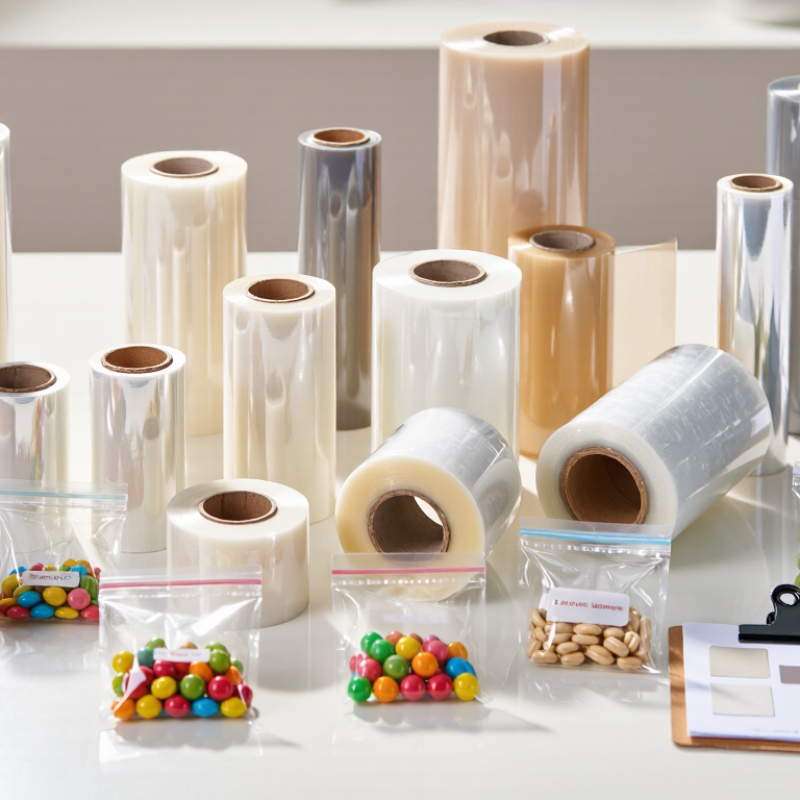
A reliable cellophane wrapping supplier proves performance before discussing price. During packaging trials, I check film thickness, roll width, transparency, seal strength, and moisture response. A clear sample should remain stable after handling, not wrinkle beside a warm product. Small details matter.
Professional suppliers provide complete technical sheets and consistent batch records. These documents should identify cellulose source, coatings, adhesive compatibility, and intended applications. If wrapping touches food, suppliers must provide current compliance documents for the destination market. Independent test reports add credibility, especially for oxygen transmission and tear resistance. Ask for production samples, not only showroom pieces. Samples reveal uneven winding, brittle edges, and printing defects.
Reliable communication also shows operational experience. The supplier should explain minimum order quantities, lead times, packing methods, and replacement procedures in plain language. Traceability is essential. Each roll should connect to a batch number and inspection record. Sustainability claims deserve careful review because “biodegradable” can mean different things under different testing conditions. I once treated a low quoted price as a strong advantage, but weak core protection caused damaged rolls during transit. That mistake changed my evaluation process. A dependable supplier may not promise perfection. They should acknowledge limitations, answer difficult questions, and offer a practical correction plan when results fall short.
Comparing the 10 best cellophane wrapping suppliers requires more than checking quoted price. Material evidence matters. Ask for film gauge, tensile strength, oxygen transmission rate, water-vapor transmission rate, and seal performance. Request recent laboratory reports, not brochure claims. For food contact, verify migration testing against the destination market’s rules.
EN 13432 can support industrial compostability claims, but it does not prove home compostability. European Bioplastics and nova-Institute reported global bioplastics production capacity of 2.41 million tonnes in 2024, projected to reach 5.38 million tonnes by 2029. This figure covers all bioplastics, not cellophane alone.
Supplier experience appears in repeatability. Compare three production lots, then inspect thickness variation, curl, haze, odor, and print adhesion. Small differences become obvious around a gift basket or bakery tray. Check pulp origin, coating chemistry, certificates, traceability, and corrective-action records. Ask how defects are handled at the port. Lead time should include coating, testing, export documents, and customs clearance.
Do not compare minimum order quantities alone. One low quote may hide expensive relabeling or rejected rolls.
Global buyers should score landed cost, not factory price. Include freight, duties, insurance, cores, pallet design, and currency exposure. UNEP’s 2023 Turning off the Tap report states that plastic pollution could fall by 80% by 2040 under major system changes. That projection supports careful material selection, but local disposal routes still matter.
Be skeptical. Certificates can be valid yet irrelevant to the exact coating or application. Pilot orders, retained samples, and written specifications create stronger evidence than sales promises.
Even experienced purchasers misjudge humidity performance. That is worth admitting before signing a long contract.
Supplier One focuses on transparent cellulose film for bakery and confectionery packaging. Buyers should request thickness samples and test sealing under real production temperatures.
Supplier Two offers printed wrapping rolls for gift boxes and seasonal products. Its useful strength is color consistency, although buyers should confirm ink migration documents before ordering.
Supplier Three serves small businesses with low minimum quantities and mixed-size cartons. This helps new importers, but freight costs may reduce the advantage.
Supplier Four specializes in moisture-resistant coatings for products exposed to humid storage. Ask for laboratory data, not only verbal assurances.
Supplier Five provides compostable film options with clear material specifications. Performance can change between batches, so retain approved samples for comparison.
Supplier Six supplies wide rolls for automated wrapping lines. Its profile suits factories that need stable roll tension and accurate winding.
Supplier Seven offers narrow film for candles, soap, and small gift items. Buyers should inspect edge quality because uneven cutting can slow manual packing.
Supplier Eight supports custom widths and perforation patterns. This flexibility is practical, but custom tooling may extend delivery schedules.
Supplier Nine combines wrapping film with paper-based packaging accessories. One supplier can simplify purchasing, though quality may vary across product categories.
Supplier Ten emphasizes export documentation, pallet protection, and shipment tracking. These details matter when containers face long transit times.
None of these profiles replaces independent testing; that is where many purchasing decisions become too optimistic.
10 Best Cellophane Wrapping Suppliers for Global Buyers
Global buyers should assess more than price and glossy samples. Product range matters. Reliable suppliers may offer transparent, printed, coated, heat-sealable, and moisture-resistant cellophane films. Thickness often ranges from about 20 to 40 microns, but actual performance depends on coating and storage conditions.
European Bioplastics and nova-Institute reported global bioplastics production capacity at approximately 2.47 million tonnes in 2024. They project about 5.73 million tonnes by 2029. This broader market signal supports demand for bio-based packaging, but it does not prove every cellophane film is compostable. Ask for current test reports, not marketing language. EN 13432 or ASTM D6400 certification should match the exact film structure. ISO 9001 supports process control, while food-contact compliance requires separate documentation.
Customization should include roll width, core size, print colors, sealing temperature, and carton configuration. Export-ready suppliers should provide clear HS classification, commercial invoices, packing lists, and stable Incoterms. Their export reach deserves practical testing. Request samples from the same production line, then check curling, tearing, odor, and seal strength after simulated transport. Certifications can expire. This is easy to overlook. A supplier may serve many countries yet lack local regulatory knowledge. Review audit records, batch traceability, and complaint response times. I would also question unusually low quotations; savings may hide thinner film, weak coatings, or inconsistent winding.
Comparative market-reference profiles for international sourcing; specifications and compliance documents should be verified for each shipment and SKU.
| Supplier Profile | Primary Product Range | Typical Thickness | Customization Options | Food-Contact & Quality Documents | Packaging Formats | Typical Export Reach | Indicative MOQ | Indicative Lead Time |
|---|---|---|---|---|---|---|---|---|
| Supplier Profile 01 | Clear regenerated-cellulose film for confectionery, bakery, gift wrapping, and decorative packaging | 20–40 microns | Roll width, roll length, core size, sheet cutting, transparent or tinted film | Food-contact declaration, technical data sheet, batch traceability, migration-test documentation where applicable | Jumbo rolls, narrow rolls, flat sheets, retail-ready packs | Europe, North America, East Asia, Southeast Asia | 500–1,000 kg | 4–7 weeks |
| Supplier Profile 02 | Moisture-resistant coated cellophane for sweets, snack portions, and products requiring improved barrier performance | 23–45 microns | Heat-sealable coating, one-side or two-side coating, gloss or matte finish, custom slit widths | Food-contact statement, coating specification, quality-management records, conformity documents by destination market | Roll stock, pre-cut sheets, pillow-pack webs | Western Europe, Middle East, North Africa, South Asia | 1,000–2,000 kg | 5–8 weeks |
| Supplier Profile 03 | Printed cellophane film for seasonal confectionery, bakery products, gift packs, and promotional wrapping | 22–40 microns | Rotogravure or flexographic printing, repeat length, spot colors, surface treatment, artwork support | Ink compliance declaration, food-contact documentation, color approval proof, batch inspection report | Printed rolls, sheets, twist-wrap strips, pre-cut formats | North America, Europe, Latin America, Australia | 2,000–3,000 kg | 6–9 weeks |
| Supplier Profile 04 | Twistable cellophane film for individual candies, caramels, toffees, and small confectionery items | 20–30 microns | High-twist grades, color matching, printed registration, narrow-width slitting, pre-cut pieces | Food-contact declaration, twist-performance test data, dimensional inspection, traceability records | Narrow rolls, twist-wrap reels, cut sheets | Europe, Southeast Asia, South America, Gulf markets | 300–800 kg | 4–6 weeks |
| Supplier Profile 05 | Colored and translucent cellophane for floristry, craft packaging, hampers, stationery, and presentation wrapping | 18–35 microns | Color matching, transparent or opaque finish, sheet dimensions, perforation, branded outer cartons | Material specification, color-control report, packaging declaration, sustainability information upon request | Sheets, rolls, bags, gift-wrap sets | Europe, North America, Oceania, East Asia | 200–600 kg | 3–6 weeks |
| Supplier Profile 06 | High-clarity film for bakery, bread, biscuits, dried fruit, and premium food presentation | 25–45 microns | Optical clarity, anti-fog options where available, custom widths, heat-seal compatibility, printed artwork | Food-contact compliance file, migration testing, lot inspection, supplier quality questionnaire | Form-fill-seal rolls, lidding webs, sheets | Europe, North America, China, Japan, South Korea | 1,000–2,500 kg | 5–8 weeks |
| Supplier Profile 07 | Metallized or decorative cellulose-based film for premium gift boxes, seasonal packs, and visual merchandising | 20–35 microns | Metallic effect, colored finish, gloss level, custom printing, laminated constructions where required | Material declaration, coating and ink documentation, print-quality report, destination-specific compliance file | Rolls, sheets, ribbons, gift-wrap components | Middle East, Europe, North America, Southeast Asia | 800–1,500 kg | 6–9 weeks |
| Supplier Profile 08 | Compostable-oriented cellulose film for brands seeking renewable-material packaging and plastic-reduction positioning | 20–35 microns | Uncoated or coated structure, custom roll width, print design, compostability documentation by grade | Compostability test report where applicable, food-contact declaration, renewable-content statement, technical data sheet | Rolls, sheets, bags, specialty wrapping formats | European Union, United Kingdom, North America, Australia | 500–1,200 kg | 6–10 weeks |
| Supplier Profile 09 | Industrial-grade cellulose film for converters, packaging distributors, and high-volume contract manufacturing | 25–50 microns | Jumbo-roll supply, precision slitting, custom core diameter, pallet configuration, recurring call-off orders | Quality-management certification may be available, certificate of analysis, batch traceability, technical compliance file | Jumbo rolls, slit rolls, export pallets | Worldwide distribution through container and consolidated freight | 3,000–10,000 kg | 6–10 weeks |
| Supplier Profile 10 | Small-batch and private-label cellophane wrapping for specialty foods, handmade products, events, and retail launches | 18–40 microns | Low-volume custom cuts, digital or simple repeat printing, custom labels, mixed-size cartons, sample development | Product specification, food-contact declaration where relevant, sample approval, pre-shipment inspection options | Retail rolls, sheets, bags, sample kits | North America, Europe, Oceania, selected Asian markets | 100–300 kg | 3–7 weeks |
Notes: Thickness is stated in microns (µm). Minimum order quantities, production schedules, certification scope, export terms, and available coatings vary by product grade, destination market, and order configuration.
Selecting among the 10 best cellophane wrapping suppliers requires more than comparing prices. Global buyers should define film thickness, roll width, transparency, moisture resistance, and heat-sealing needs. A bakery wrapper needs different performance from a gift package. Ask for physical samples before approving production. Small details matter.
An experienced supplier should provide clear specifications, batch records, safety documents, and consistent test results. Check whether the factory can support your order volume and target delivery schedule. Review minimum order quantities, packaging methods, payment terms, and shipping responsibilities. Independent material testing can confirm strength and barrier performance. Do not rely only on attractive product photos.
I have learned that a polished website proves very little. A useful supplier answers technical questions directly and admits product limitations. Request a sample from a normal production batch, not only a specially prepared sample. Speak with the quality team when possible. Visit the facility or arrange a credible remote audit. No checklist is perfect. Some buyers overlook communication delays until a shipment is already late. Comparing response times, corrective-action records, and replacement policies can reveal reliability. Buyers should also verify that claims about compostability, food contact, or sustainability match applicable destination-market requirements. Verification takes time, but rushed approval often creates higher costs later.