Call for Price: 0086-15515573212
Buying a Hot Melt Coating Machine is not simply a matter of choosing the fastest line. The machine must match your adhesive, substrate, coating weight, web width, and production goals. A narrow film line needs different controls from a wide nonwoven system. Small mismatches can create edge beads, uneven coverage, or wasted adhesive.
Dr. Thomas H. Wenzel, a polymer-processing specialist, once observed, “A coating machine succeeds only when material, temperature, and web control work as one system.” That principle should guide every quotation and factory visit. Ask about slot-die accuracy, pump stability, temperature zones, line speed, and automatic gap adjustment. Request a coating trial using your real adhesive and substrate. A glossy demonstration sample may hide problems that appear after several hours of continuous production.
Look closely.
The ten tips in this guide focus on practical decisions that buyers sometimes overlook. They cover viscosity control, compatible heating systems, coating-weight accuracy, cleaning access, operator training, spare parts, energy use, and after-sales support. Inspect the melt tank and hose insulation. Check whether the control screen shows useful alarms, not only attractive graphics. Confirm the supplier’s experience with your product category.
A perfect purchase is unlikely. I have seen buyers focus too heavily on initial price and regret weak technical support later. Others choose excessive capacity, then pay for unused energy and maintenance. Compare total operating cost, not only the equipment invoice. Most importantly, record your assumptions before signing. Your production plan may change. Your machine should still leave room for that reality.
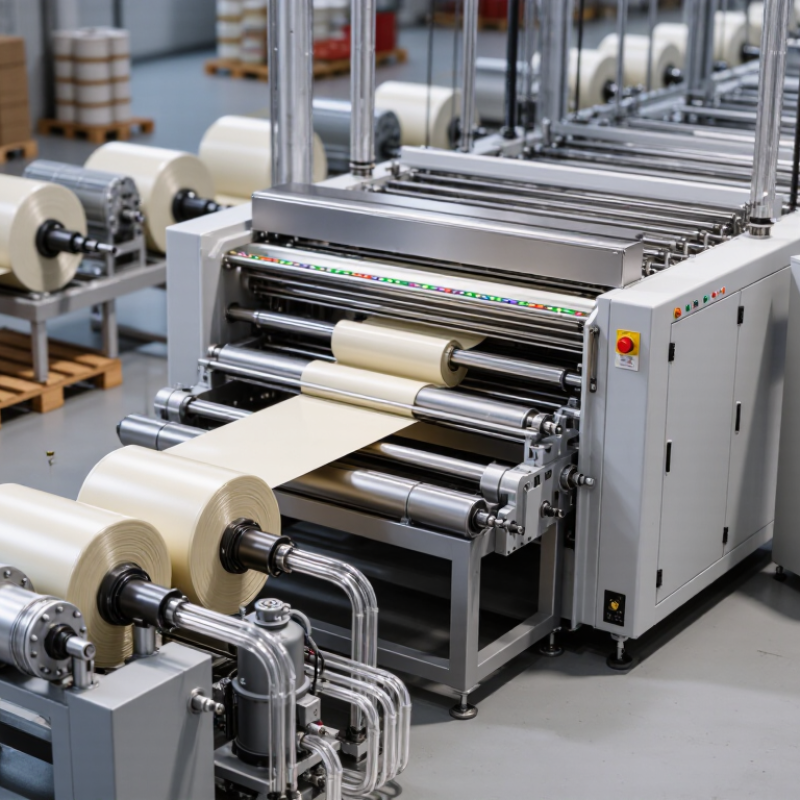
Define your coating requirements before comparing machines. Record substrate type, coating weight, web width, line speed, adhesive viscosity, and operating temperature. A packaging film may need a thin, even layer. A nonwoven product may require higher output and stronger penetration. Grand View Research estimated the global hot melt adhesives market at about USD 10.3 billion in 2023. Its projected growth shows why flexible production planning matters. However, market growth does not guarantee that one machine suits every process.
Tip: Calculate real production goals, not ideal numbers. Include startup waste, cleaning time, roll changes, and planned downtime. If your target is 500 kilograms daily, define the actual hourly output after interruptions. A machine rated for 100 meters per minute may produce much less in practice. That assumption can be wrong. Ask suppliers for trial data using your adhesive and substrate.
Tip: Specify the coating method carefully. Slot-die systems can support precise coating weights, while roll coating may offer simpler handling for certain materials. Request coating uniformity data across the full web width. The Smithers report, The Future of Hot Melt Adhesives to 2028, identifies packaging, hygiene, and nonwoven applications as important demand areas. Your machine should match the intended market, not merely today’s order. Also measure temperature stability, viscosity control, changeover time, and operator access. A detailed requirement sheet prevents expensive compromises.
10 Tips for Buying a Hot Melt Coating Machine
Compare the process before comparing prices. Grand View Research estimated the global hot melt adhesives market at about USD 11.6 billion in 2023, with 6.1% projected annual growth through 2030. That expansion increases machine choices, but not every platform suits every adhesive. Check whether slot-die, curtain, roller, or spray coating matches your target weight and surface. Ask for trials using your actual substrate. Measure coat-weight variation across the web. Small differences matter.
EVA supports economical, fast-setting applications. Polyolefin usually offers stronger moisture resistance and cleaner running. Reactive polyurethane can provide high performance, but it demands controlled moisture and careful maintenance. Polyamide may tolerate heat, though processing temperatures can be demanding. MarketsandMarkets forecasts the hot melt adhesives market could reach approximately USD 14.5 billion by 2028, reflecting wider material adoption. Confirm each estimate with your own production tests. Reports describe markets, not your factory.
Choose a configuration around line speed, width, viscosity, and changeover frequency. A heated tank may suit steady production, while drum or bulk melters can reduce manual refilling. Inspect hose insulation, pump accuracy, temperature zones, filtration, and emergency shutoff access. Check recipe control and data logging. Calculate energy use per coated square meter. Review cleaning time, spare parts, operator training, and ventilation needs. Do not trust a brochure alone. I would also question an impressive trial using only one coat weight. The overlooked setting may be the expensive one.
| Tip | Buying Focus | Hot Melt Technology | Suitable Materials | Recommended Machine Configuration | Key Data to Compare | Practical Verification |
|---|---|---|---|---|---|---|
| 1 | Define the coating process | Direct coating, transfer coating, slot-die coating, or spray coating. | Pressure-sensitive adhesive Reactive adhesive Thermoplastic adhesive | Choose the coating head and web path according to whether the adhesive is applied directly to the substrate or first transferred to a release liner. | Target coat weight, coating width, line speed, substrate type, and required coating pattern. | Run trials using the actual substrate, release liner, adhesive grade, and production speed. |
| 2 | Match the adhesive chemistry | Thermoplastic hot melt systems are commonly used for non-reactive bonding; reactive systems cure after application. | EVA Polyolefin Polyamide Polyurethane reactive | Use a compatible melter, heated hose, applicator, and temperature-control system. Reactive materials may require sealed or moisture-controlled equipment. | Melting range, application temperature, open time, viscosity, curing behavior, and moisture sensitivity. | Confirm the adhesive technical data sheet and verify the complete fluid path is chemically compatible. |
| 3 | Select the melting method | Bulk melting, grid melting, drum melting, or tank melting. | Pellets, pillows, blocks, slugs, cartridges, or adhesive supplied in drums. | Bulk melters suit continuous high-volume production; drum unloaders suit larger packaged adhesive volumes; tank systems suit controlled batch feeding. | Melting capacity, adhesive refill frequency, residence time, usable tank volume, and material changeover requirements. | Check whether the feeder can handle the adhesive form without bridging, dusting, sticking, or inconsistent feeding. |
| 4 | Check viscosity capability | Gear-pump or progressive-cavity delivery is generally used when stable, metered adhesive flow is required. | Low-, medium-, and high-viscosity hot melts, depending on chemistry and temperature. | Select a pump, hose diameter, nozzle, and filter size that maintain stable pressure at the required flow rate. | Viscosity at application temperature, pressure range, flow rate, pump turndown, and filtration level. | Measure viscosity at the actual operating temperature; do not select equipment using room-temperature viscosity alone. |
| 5 | Compare coating-head options | Slot die for uniform continuous films; roll coating for controlled transfer; spray systems for patterned or porous coverage. | Films, foams, nonwovens, textiles, paper, foil, and flexible laminates. | Use a fixed-width or adjustable-width die for continuous coating; use shim changes, die lips, or pattern controls when width or profile changes frequently. | Coating-width range, coat-weight uniformity, minimum stable coat weight, edge control, and pattern accuracy. | Inspect cross-web and machine-direction coat-weight variation through a complete operating-speed trial. |
| 6 | Size the production capacity | Continuous hot melt coating is normally sized from adhesive consumption rather than heater rating alone. | All adhesive types, after accounting for density, solids, waste, and production yield. | Match melter output, pump capacity, coating width, and line speed so that the system operates within its stable range. | Typical calculation: adhesive mass flow = coat weight × coating width × line speed, with consistent units and allowance for process loss. | Compare calculated demand with the usable output of the melter and pump at the target application temperature. |
| 7 | Evaluate temperature control | Multi-zone heating is used to control the melter, hose, manifold, die, and other heated components independently. | Temperature-sensitive reactive adhesives and standard thermoplastic hot melts. | Specify independent temperature zones, insulated heated hoses, over-temperature protection, and low-level alarms. | Temperature range, control accuracy, warm-up time, sensor type, alarm functions, and maximum safe operating temperature. | Check temperature stability during start-up, continuous operation, idle periods, and adhesive replenishment. |
| 8 | Plan web handling and tension | Coating quality depends on stable web tension, nip pressure, alignment, and substrate support. | Thin films, paper, foil, nonwovens, textiles, foams, and laminated webs. | Consider unwind and rewind units, edge guides, tension control, chill rolls, nip rolls, and substrate preheating when required. | Web width, roll diameter, tension range, line speed, allowable stretch, and substrate thickness variation. | Test the most difficult substrate and smallest practical coat weight, not only the easiest production material. |
| 9 | Compare cleaning and changeover design | Hot melt systems may require purge cycles, heated drain points, removable filters, or dedicated fluid paths. | Materials with different colors, viscosities, cure mechanisms, or temperature requirements. | Choose accessible manifolds, quick-disconnect heated hoses, automatic pressure relief, and tooling designed for safe removal. | Changeover time, purge-material consumption, dead volume, filter accessibility, drainability, and cleaning temperature. | Request a documented changeover demonstration using two different adhesive grades or colors. |
| 10 | Verify safety, controls, and expansion | Modern systems may include closed-loop pressure control, recipe management, web-speed synchronization, and safety interlocks. | Standard hot melts, moisture-reactive materials, and adhesives requiring controlled handling. | Specify guarding, emergency stops, over-temperature shutdown, exhaust or ventilation provisions, PLC controls, and spare capacity for future heads. | Operator access, electrical load, compressed-air demand, maintenance access, documentation, spare-parts availability, and upgrade potential. | Review risk assessment, utility requirements, maintenance procedures, training materials, and acceptance-test criteria before purchase. |
10 Tips for Buying a Hot Melt Coating Machine?
Speed should be measured as usable output, not advertised web speed. Ask for production data at your target coating width and adhesive weight. Grand View Research estimated the global hot melt adhesives market at about USD 10.26 billion in 2023, with steady growth expected through 2030. This expansion increases pressure on converters to maintain speed without sacrificing coating consistency. A faster line is useless when operators must stop it repeatedly.
Precision deserves closer inspection. Request test results for coat-weight variation, edge control, and registration accuracy. Check whether the machine supports closed-loop monitoring, because manual sampling can miss short defects. Heating control is equally important. Compare temperature stability across the tank, hose, and coating head. Even small temperature swings can change viscosity, create streaks, or damage heat-sensitive substrates. The Association of International Metallizers, Coaters and Laminators highlights process control and coating uniformity as recurring priorities in technical guidance for web coating operations.
Application quality appears on the finished roll. Inspect bond strength, surface appearance, winding tension, and curing behavior after storage. Ask to run your actual substrate, not a convenient substitute. I have seen impressive demonstrations fail during longer trials. That mistake is easy to make. Require a documented test protocol, calibrated sensors, maintenance access, and operator training. MarketsandMarkets reports continued growth in hot melt adhesive demand, but market growth alone cannot prove machine suitability. Review the data twice. Then question what the data leaves out.
This reference chart compares four practical buying criteria using a 0–100 evaluation index. The index reflects commonly specified industrial targets, including coating speeds of approximately 20–100 m/min, coating-weight accuracy within about ±2–5%, heating stability around ±1–2°C, and application uniformity of 95% or higher. Higher scores indicate stronger suitability for consistent production.
10 Tips for Buying a Hot Melt Coating Machine?
Compatibility should guide every purchase decision. Check the machine’s working width, coating weight range, line speed, and temperature control. Confirm that it handles your adhesive type and substrate without unstable flow. Ask for a trial using your actual film, fabric, or paper. A showroom sample can look convincing, yet production materials may behave differently. Request clear data on heating time and coating accuracy.
Safety features deserve practical inspection, not just a checklist. Look for insulated surfaces, guarded moving parts, emergency stops, temperature limits, and clear alarm signals. Operators should reach controls without standing near hot adhesive lines. Review cleaning procedures while the machine is cold and powered down. Small design details matter. Poor access can encourage rushed maintenance and unsafe shortcuts.
Maintenance access affects long-term reliability. Inspect pumps, hoses, nozzles, filters, and electrical panels before signing an order. They should be reachable with ordinary tools where possible. Ask about recommended service intervals, spare-part availability, and fault records. Operator support is equally important. Request hands-on training, readable manuals, startup guidance, and responsive technical assistance. I once underestimated training time on a similar installation; the machine worked, but early waste was higher than planned. That mistake changed how I evaluate support. A capable supplier should discuss limitations honestly, not promise perfect results.
Buying a hot melt coating machine starts with total cost, not the quoted price. Estimate the applicator, heating system, coating head, installation, training, energy, cleaning, and spare parts. McKinsey reports that predictive maintenance can reduce machine downtime by 30–50% and maintenance costs by 20–30%. Ask whether the supplier provides condition monitoring and maintenance records. Request a five-year cost model. It may expose an uncomfortable truth.
Supplier reliability needs evidence. Check response times, technician coverage, spare-part stock, warranty exclusions, and documented factory acceptance testing. Speak with users running similar adhesives, coating widths, and production speeds. Request trial data using your actual substrate. A polished demonstration proves little. The PMMI 2023 Packaging Machinery Economic Report highlights continuing pressure on manufacturers to improve automation, productivity, and equipment flexibility. Your supplier should explain measurable results, not repeat slogans.
Customization should solve production problems, not add fashionable options. Confirm viscosity range, temperature stability, coating weight control, web tension, cleaning access, and operator safety features. Leave room for wider coating heads, additional unwind stations, inspection systems, or a second line. Deloitte’s 2023 Global Smart Manufacturing Survey found that 86% of manufacturers expect smart manufacturing to support competitiveness within five years. Therefore, check data interfaces and upgrade paths before signing. I would not assume every promised upgrade remains affordable; obtain written prices, lead times, and engineering limits. Small omissions become expensive later.