Call for Price: 0086-15515573212
Choosing the right Lotion Bottle is more than selecting an attractive container. It affects product protection, dispensing performance, customer trust, and production costs. A bottle that looks elegant on a screen may feel awkward in a wet bathroom. Its pump may clog. The label may peel after repeated handling.
Practical packaging experience shows that lotion texture should guide the decision. Thick creams often need wider openings or stronger pumps. Lightweight lotions may work well with fine dispensers. Materials such as PET, HDPE, glass, and recycled plastic each offer different benefits. Consider weight, breakage risk, chemical compatibility, and shipping conditions. Airless designs can reduce product exposure, but they may increase cost and complicate recycling. No package choice is perfect.
Reliable selection requires more than supplier photos. Request physical samples. Test the pump with the actual formula. Check leakage after transport simulation and repeated use. Examine the bottle under heat, cold, and strong light. Record every result. Packaging specialists, experienced manufacturers, and recognized industry guidance can support better decisions, but brand owners must still verify performance independently. A clean design is valuable. So is honest testing.
Small details matter. A smooth shoulder improves labeling. A firm base reduces bathroom spills. Clear instructions can prevent wasted product. The best Lotion Bottle supports the formula, the customer, and the brand promise without unnecessary complexity. Even experienced teams can miss one detail. That is worth remembering.
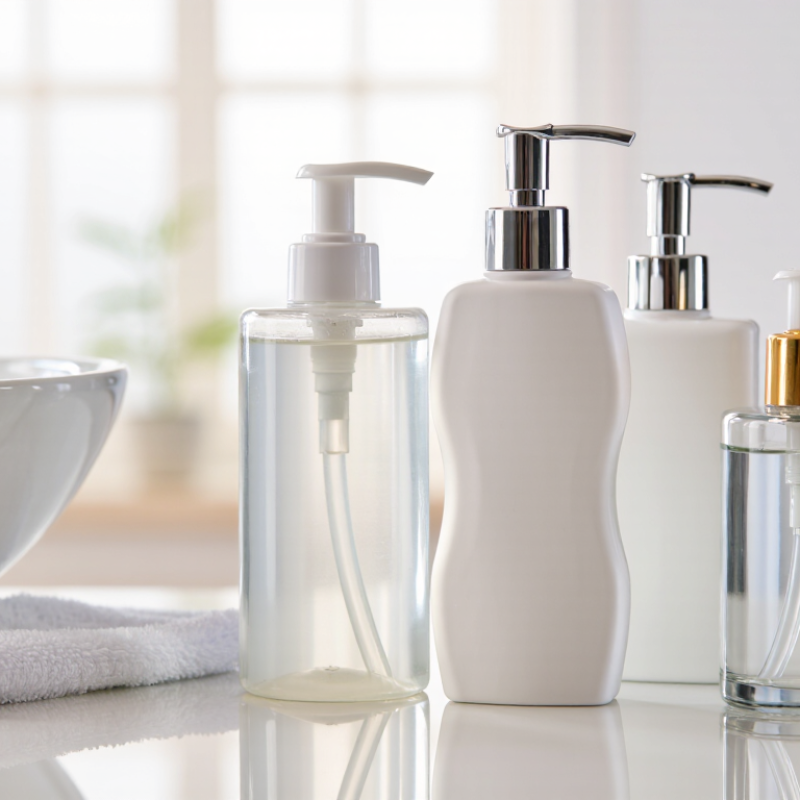
Choosing a lotion bottle starts with the formula, not the label design. In production reviews, viscosity often decides whether packaging feels reliable or frustrating. Thin lotion may flow through a pump too quickly, creating messy doses. Thick cream may need a wider passage, stronger spring, or squeeze format. Test the actual formula at room temperature and after heat exposure. Small changes matter. A bottle that works in a sample room may struggle on a bathroom shelf.
Define the intended dose and use case before approving a shape. A face lotion may need a controlled 0.5-milliliter delivery. A family body lotion may require larger output and easy one-hand use. Consider wet fingers, travel, storage, and remaining product. Pump closures can improve hygiene, while disc tops may suit thicker formulas. Airless systems can reduce exposure, but they may not dispense every formula consistently. That limitation deserves honest testing. Ask a packaging engineer to measure dose variation across repeated actuations, not just one successful sample.
Tips: Fill bottles with the finished formula, then test them at different temperatures. Record the first dose, average dose, leakage, and leftover product. Check whether the actuator returns smoothly after 100 cycles. Use a transparent prototype when possible. It reveals air pockets and uneven flow. Do not choose the lightest bottle automatically; thin walls can dent during transport. We once underestimated cap alignment, and the shelf result looked careless. A second review would have caught it.
| Formula Profile | Typical Viscosity at 25°C | Recommended Bottle Format | Suitable Dispensing System | Typical Dose per Actuation | Best Use Cases | Key Selection Considerations |
|---|---|---|---|---|---|---|
| Light lotion or body milk | 100–1,000 cP | Standard plastic bottle with a stable shoulder and narrow-to-medium opening | Disc-top cap, flip-top cap, or low-output lotion pump | 0.5–1.5 mL | Body moisturizers, hand lotions, after-sun products | Choose a closure that limits leakage during transport. A smaller opening can improve control for thin formulas. |
| Medium-viscosity lotion | 1,000–5,000 cP | Rigid bottle with a broad shoulder and sufficient internal clearance | Lotion pump or medium-orifice flip-top cap | 1.0–2.0 mL | Daily facial moisturizers, body lotions, family-care products | Confirm that the formula flows consistently after storage. The bottle should support easy evacuation without excessive squeezing. |
| Rich lotion or cream-lotion | 5,000–15,000 cP | Wide-shoulder bottle or inverted squeeze bottle | High-output lotion pump, wide-orifice cap, or squeeze dispensing system | 1.5–3.0 mL | Rich body creams, intensive hand care, cold-weather moisturizers | Use a larger flow path to reduce clogging and improve priming. Inverted designs can help the product move toward the closure. |
| Very thick cream | 15,000–50,000 cP | Wide-mouth jar, wide-neck bottle, or soft squeeze pack | Wide-mouth access, large-orifice cap, or specialized high-viscosity pump | 2.0–5.0 mL | Barrier creams, intensive foot creams, concentrated treatment products | Test product recovery, air exposure, and user handling. A narrow neck may make the pack difficult to empty. |
| Formula with suspended particles | Varies; measure under actual conditions | Bottle with a wide, unobstructed product pathway | Large-orifice pump or cap designed for particulate formulas | 1.0–3.0 mL | Exfoliating lotions, mineral-containing body products, scrub lotions | Check particle size, sedimentation, valve clearance, and repeated-actuation performance to reduce blockage risk. |
| Air-sensitive or oxidation-sensitive lotion | Usually 500–15,000 cP | Opaque or low-light-transmission bottle with a protected dispensing system | Airless pump or low-backflow pump | 0.2–1.5 mL | Active skincare, antioxidant lotions, formulas with sensitive botanical ingredients | Evaluate oxygen exposure, light transmission, compatibility, and priming. Packaging performance depends on the complete formula-pack system. |
| Travel-size lotion | 100–10,000 cP | Compact bottle with reinforced closure and leak-resistant fit | Flip-top cap, screw cap, or compact pump | 0.5–2.0 mL | Trial sizes, hotel amenities, gym kits, travel retail | Prioritize impact resistance, closure security, label space, and compliance with applicable carry-on or transport requirements. |
| Large household or family-use lotion | 500–10,000 cP | Large-volume bottle with a broad base and ergonomic grip area | Lockable lotion pump or controlled-flow flip-top cap | 1.5–3.0 mL | Family body lotion, workplace hand lotion, bathroom dispensers | Consider one-handed operation, drop resistance, pump lockability, refill frequency, and stability when the bottle is nearly empty. |
Grand View Research valued the global cosmetic packaging market at $32.7 billion in 2023. It also projects growth at about 3.8% annually through 2030. This scale changes how a lotion bottle should be selected. A bottle is not merely a container. It controls dosing, product protection, shelf presence, and user trust. For a light lotion, an airless pump can reduce repeated exposure to air and fingers. For a thicker formula, test the pump with cold and warm samples. Viscosity changes.
Material decisions need evidence. Glass offers a substantial feel, but it adds weight and breakage risk during shipping. Plastic can reduce transport weight, yet its barrier performance varies by resin and wall thickness. Grand View Research identifies plastic, glass, and metal as major cosmetic packaging materials. The right choice depends on formula compatibility, not appearance alone. Request migration, leakage, drop, and torque testing from qualified suppliers. A beautiful bottle that clogs is still a failed package.
Consumer expectations also matter. McKinsey’s 2023 packaging research reported that roughly 60% to 70% of consumers may pay more for sustainable packaging in some markets. That finding is useful, but not universal. Local price sensitivity can overturn it. Consider recycled content, refill potential, label separation, and the bottle’s actual recycling pathway. Measure one-handed dispensing, residue after ten pumps, and the final dose left inside. Small details often decide whether customers repurchase. My own design bias is simple: I once favored a heavier bottle because it felt premium. It performed worse in shipping tests. Weight can mislead.
The global cosmetic packaging market was valued at approximately $32.7 billion in 2023 and is projected to reach about $40.1 billion by 2030, highlighting the importance of selecting packaging that supports long-term product protection, usability, and market growth.
When evaluating a lotion bottle, compare dispensing performance, material compatibility, barrier protection, ergonomics, recyclability, and production scalability. Market values are based on Grand View Research data; the 2030 figure is shown as the reported forecast.
PCR content and recyclability should guide your lotion bottle decision. According to the OECD Global Plastics Outlook, only 9% of global plastic waste was recycled in 2019. That gap matters. PET usually offers the strongest PCR supply and clear visibility on shelves. Its lightweight structure can also reduce transport emissions. HDPE provides excellent chemical resistance and is widely accepted in household recycling systems. However, recycled HDPE may look slightly gray or uneven. That is not necessarily a quality problem.
PP is durable and heat-resistant, but its recycling access remains less consistent. The Association of Plastic Recyclers notes that polypropylene collection has improved, yet local acceptance still varies. Glass is endlessly recyclable in theory. The U.S. EPA reported a 31.3% glass container recycling rate in 2018. Still, glass is heavy and breakable, creating extra transport impacts. The best material depends on your filling process, shipping distance, and local recycling infrastructure.
Tips: Ask suppliers for verified PCR percentages, not vague “eco” claims. Check whether the PCR is post-consumer material. Request migration, safety, and performance documentation. Test the bottle with your lotion for six weeks. A beautiful package can still fail at the pump. Also, confirm local recycling instructions before selecting a resin code. Recyclability is practical, not merely technical. I would avoid assuming PP is always worse, or glass is always greener; the full life cycle can change the answer.
A lotion bottle should protect the formula, not only improve shelf appeal. Its pump, cap, and inner surfaces may contact preservatives, oils, fragrances, or active ingredients. Choose samples made from the intended packaging material. Test the final formula inside the final bottle whenever possible.
ISO 11930’s 28-day challenge test evaluates preservative performance after controlled microbial inoculation. A qualified laboratory usually checks results on days 7, 14, and 28. The test helps confirm whether the lotion resists microbial growth during normal use. However, it does not fully prove chemical compatibility between the formula and bottle. Additional studies should examine color changes, odor, viscosity, leakage, swelling, and material absorption. A passing result is valuable, but it is not permanent proof.
Tips: Test filled bottles after storage under heat and room-temperature conditions. Compare pumps with jars, because repeated finger contact can raise contamination risks. Record every material, batch, closure, and filling condition. I would not rely on a laboratory sample that differs from production packaging. Small changes can matter. Review unusual results with a microbiologist and packaging specialist before approval. Packaging testing can feel repetitive, yet skipping one condition may create an expensive blind spot.
A lotion bottle must survive more than a clean shelf display. Its closure, shoulder, pump, and base face pressure during filling, storage, and delivery. I recommend testing the complete shipping unit, not only an empty bottle. A filled package behaves differently.
01 Use a laboratory protocol based on the selected ASTM D4169 distribution cycle. The cycle should match the expected shipping method, package weight, and handling environment. Test samples through vibration, compression, and repeated impact exposure. Keep bottles in realistic cartons with normal dividers and cushioning. Record every crack, dent, pump release, and cap movement.
Leakage testing needs close observation. Weigh each unit before and after testing. Place absorbent paper beneath the closure during vibration. Even a thin oily mark deserves attention. Check whether the pump locks correctly after impacts. Inspect the dip tube, gasket, and threaded neck under bright light. Small flaws often become larger during warehouse movement.
Do not rely on one successful sample. Manufacturing variation can change wall thickness or thread fit. Test multiple units from different production runs when possible. I have seen packages pass a drop test yet fail after extended vibration. That result is not convenient, but it is useful. It may show that the bottle needs a stronger closure, better carton support, or a revised filling level. Choose the lightest bottle that still protects the formula through its real distribution cycle.