How to Choose the Right Beverage Can End in 2026?
Choosing the right Beverage Can End in 2026 is not just a packaging decision. It affects filling-line performance, product protection, opening comfort, and the look of the finished can. A sleek end may suit a premium drink, while a standard design can offer practical value for high-volume production. The best option depends on the can body, beverage, equipment, and customer expectations.
Small details matter. Diameter, countersink depth, tab style, and coating all need to match the can and the seaming setup. A mismatch may cause avoidable line stoppages or inconsistent seams. Carbonated drinks also place different demands on an end than still beverages, so pressure requirements should be confirmed with qualified packaging and equipment suppliers. Ask for current specifications, material details, and samples that can be tested on your actual line. A catalog description is useful, but it cannot show every production issue.
There is no universal “best” end. Compare options using measurable criteria: seam quality, opening force, compatibility, supply consistency, and total cost. Include operators in trials; they may notice a tab that feels awkward or a feeding issue that paperwork misses. Still, a tidy specification sheet can hide a poor fit on the factory floor. I would not choose on price or appearance alone. A careful trial, clear quality records, and a candid review of trade-offs make the decision more reliable. For 2026, the right choice is the one that performs consistently and suits the product people actually buy.
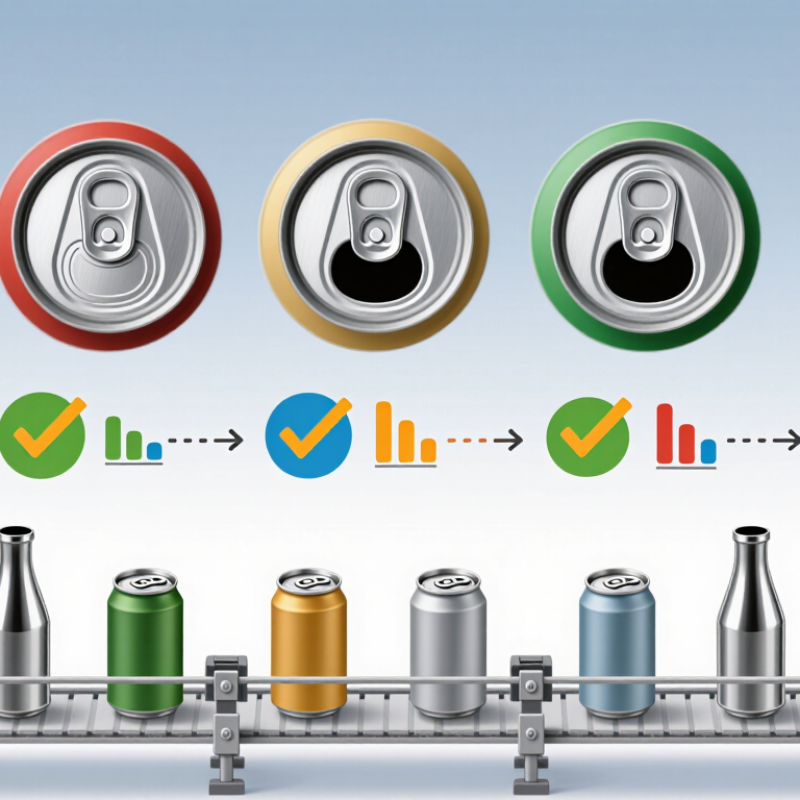
Understanding Beverage Can Ends and Their Main Types
A beverage can end is more than a lid. Its shell, scored opening, rivet, and tab affect how the can opens and pours. The most familiar type is the stay-on-tab end: the tab pushes a scored panel inward, leaving it attached. It suits many carbonated drinks and everyday use. Simple and proven. A standard opening controls the flow, though it may feel narrow for thicker drinks or quick drinking.
Wide-opening ends expose more of the can’s top, making drinking and pouring easier. They can also let more aroma reach the drinker. That sounds like an obvious upgrade, but it is not always. A larger opening may increase splashing, and the best choice depends on the beverage, can dimensions, and filling equipment. Resealable ends offer another option, particularly when people may not finish a can at once. Their added parts can affect cost and line compatibility. Check the end’s diameter, opening style, and seam fit with actual filled samples; a neat specification can still miss a small handling problem.
Defining Product, Packaging, and Consumer Requirements
Choosing a beverage can end starts with the drink, not the catalogue. Check the can-body diameter, seaming compatibility, filling conditions, and product chemistry before selecting an opening. Carbonated drinks, for example, need an end designed for internal pressure and a reliable seal. A sample run can reveal practical problems: a tab may feel stiff, or the opening may pour too quickly. Fit matters. Record tests for leakage, opening force, and product flow under real filling and serving conditions.
Consumer needs shape the choice too. A narrow opening may suit controlled sipping, while a wider aperture can make thicker drinks easier to pour. Consider grip, accessibility, and whether people drink directly from the can. McKinsey’s 2023 packaging survey covered 11,000 consumers across 11 countries, a useful reminder that preferences vary by market. The Can Manufacturers Institute’s 2024 sustainability report puts the U.S. beverage-can recycling rate at 43% for 2023 and recycled content at 71%. Those figures make material efficiency relevant, but recyclability alone does not decide the best end. Ask suppliers for documented material, seam, and performance specifications. A neat specification can still miss what happens in a cold hand on a busy afternoon.
Checking Can Compatibility, Safety, and Sustainability
Choosing a beverage can end starts with fit, not appearance. Match its diameter, curl, and seam profile to the can body and seaming equipment. Check the end’s pressure rating against the drink’s carbonation and filling conditions. Small details count. A tab that feels stiff or a score that opens unevenly can frustrate customers and disrupt production. Still, a perfect fit on paper may fail on a fast line, so trial seaming and teardown checks matter.
Safety needs measurable checks. Review the end’s coating and food-contact documentation, then test seam dimensions and leak resistance on filled cans. Confirm opening force with real users, including people with limited hand strength. A clean-looking seam is not proof of a secure seal. That is easy to overlook.
Sustainability depends on the whole package and local recovery systems. The Can Manufacturers Institute’s 2023 U.S. data reported a 43% aluminum beverage-can recycling rate and 71% recycled content. The International Aluminium Institute reports that recycling aluminum uses about 95% less energy than producing primary aluminum. These figures support choosing recyclable aluminum, but they do not guarantee every end is recovered. Ask suppliers about recycled material, coatings, and end-to-body compatibility; then verify that lighter designs still pass transport and shelf-life tests.
Evaluating Suppliers and Testing the Selected Can End
A supplier review should start with evidence, not a polished sales sample. Request dimensional drawings, material certificates, coating details, and recent inspection records for the exact end specification. Check curl diameter, countersink depth, score consistency, and tab-rivet strength across multiple production lots. Then run samples on your own seamer, using the intended can body and line speed. A perfect bench test proves little if ends feed poorly at production speed.
Test finished seams for leakage and dimensional consistency, then assess pressure resistance where the package requires it. Include transport vibration and temperature exposure when those conditions match your distribution route. The Can Manufacturers Institute and The Aluminum Association reported a 43% U.S. aluminum beverage can recycling rate for 2023. European Aluminium and Metal Packaging Europe reported 76.3% for Europe in 2022. These figures use different regions and years, so they are not directly comparable. They do underline why material choice and reliable recycling streams deserve attention.
Ask suppliers how they control score-depth variation, coating coverage, and changes between lots. Review corrective-action records, response times, and traceability—not just quoted capacity. Keep retained samples from each qualification run. Small details matter. A neat spreadsheet can still miss a noisy feed chute or occasional tab misalignment. I would revisit the test plan after the first full production shift; real line behavior sometimes exposes gaps that laboratory checks do not.