Call for Price: 0086-15515573212
Choosing the right silent diesel generator can be a daunting task. With so many options, how do you ensure you’re making the best decision? According to industry expert John Thompson, "The key is to understand your power needs and the generator's specifications." His insight highlights the importance of aligning your requirements with the generator’s capabilities.
Consider where you will use this silent diesel generator. Will it be for home use or larger construction sites? Different environments require different power outputs. Additionally, think about noise levels. You want a generator that operates quietly yet efficiently. Many consumers overlook this aspect.
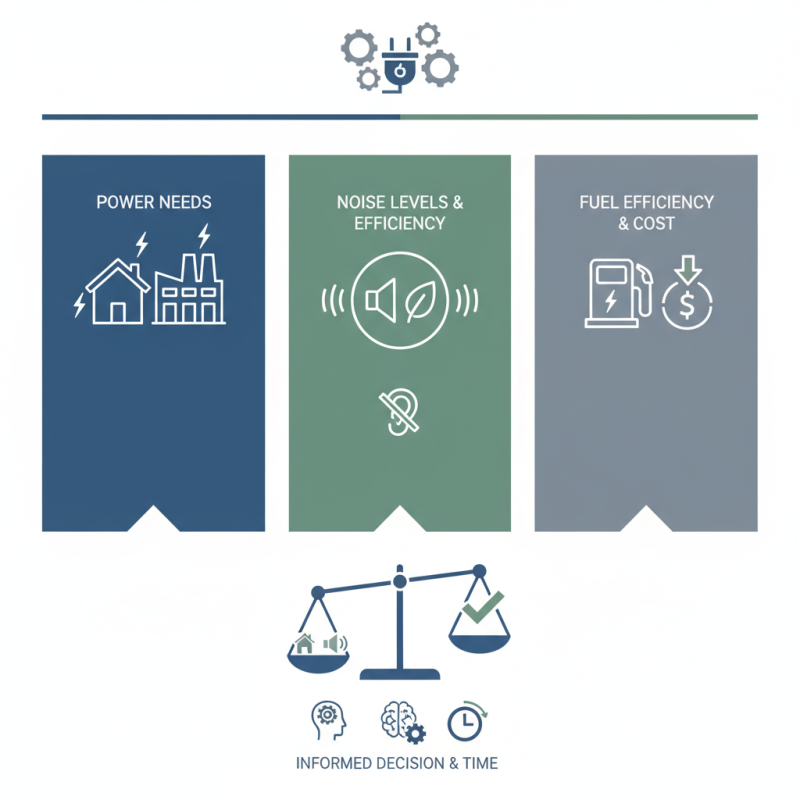
Another factor to reflect on is fuel efficiency. Some generators consume more fuel than others. This can lead to increased costs over time. Ultimately, your choice should balance power, noise, and fuel consumption. The more informed you are, the better your decision will be. Don't rush; take your time to choose wisely.
When considering a silent diesel generator, understanding your power needs is crucial. Start by determining the total wattage of the equipment you intend to run. This includes everything from lights and appliances to larger tools. List all your devices and their wattages. It may reveal that you need more power than you initially thought.
Next, factor in starting and running wattages. Some machines require extra power to start, which can be overlooked. For example, a refrigerator might need around 1,200 watts to start but only 300 watts to run afterward. This discrepancy can lead to unexpected equipment failures if not accounted for.
Consider runtime as well. A generator may provide sufficient power but burn through fuel quickly. Think about how long you’ll need it operational. You might have to balance power needs with efficiency. Assessing these details can be challenging. Reflections on your choices will help ensure you invest in the right generator for your specific requirements.
When selecting a silent diesel generator, noise levels are crucial. Generators typically operate between 60 to 80 decibels. At 60 dB, sounds resemble normal conversation. This level is acceptable for residential areas. However, at 80 dB, the sound can be disruptive. This level often resembles a heavy traffic noise. Therefore, understanding these sound levels is vital for choosing effectively.
Consider your location and use case. If you are in a quiet neighborhood, a generator with a noise level under 65 dB is preferred. According to a recent industry report, 65% of generator users prioritize noise reduction. This preference reflects growing awareness of noise pollution and its impacts. Additionally, many manufacturers now design noise-reducing enclosures. Such features can significantly lower operational noise.
**Tip:** Always check specifications for actual noise levels. Ratings can vary widely based on load and environment.
In contrast, underestimating noise can lead to complaints from neighbors. If noise is not monitored, it may impact your comfort and relationships. Prioritize your needs and consider the generator's placement as well.
**Tip:** Use sound-dampening materials or barriers if needed. This can help minimize noise even further. By thoughtfully evaluating noise levels, you can ensure your generator choice aligns with your specific requirements.
When assessing fuel efficiency and runtime of silent diesel generators, understanding the key metrics is crucial. Fuel efficiency is often measured in grams per kilowatt-hour (g/kWh). According to the Energy Information Administration, an efficient diesel generator can achieve around 180-220 g/kWh. This value indicates how much fuel the generator uses to produce power. Lower values are desirable, reflecting better fuel management and cost savings.
Runtime is directly influenced by fuel capacity and consumption rates. A generator’s runtime can range significantly based on load. Many diesel generators operate effectively for 8-12 hours on a full tank under moderate loads, but they are not always reliable at peak performance. For instance, a unit rated at 5 kW may consume about 0.5 liters of diesel per hour under load. Users should calculate how this impacts overall operational costs.
However, factors like ambient temperature and maintenance can alter performance. Sometimes, a generator may not perform as expected under certain conditions. Regular maintenance checks are vital. These challenges remind us that while selecting the right generator is essential, understanding its operational efficiency is equally important. Balancing these elements will yield the best results for your specific requirements.
When selecting a silent diesel generator, portability and size are crucial factors. A compact generator can fit various spaces. Think about your setup—will it be in a garage, on a campsite, or at a construction site? Portability means you want something lightweight and easy to move. Consider units with wheels or handles. This can make a huge difference during transport.
Size is just as important. A smaller generator saves space but may have lower power output. Will it meet your power needs? Measure the area where you'll use it. Imagine trying to squeeze a bulky unit into a tight spot. You might regret a hasty purchase. Don't forget about fuel capacity. Larger tanks mean less frequent refueling but can also add weight.
It’s easy to overlook how often you'll need to move or store the generator. A heavy unit can be a hassle over time. Reflect on your specific needs. Ask yourself: Will you use it frequently? How often will you be on the move? The right balance of portability and power can enhance your experience with a silent diesel generator. Choosing wisely can take some time and effort, but it’s worth it in the end.
When exploring budget options for silent diesel generators, it's vital to think long-term. A quality generator often means a higher initial cost, but this can result in savings over time. According to industry reports, a reliable generator can last up to 20 years with proper maintenance. Investing more upfront could lead to fewer repairs and replacements later.
Warranty options can significantly impact your overall value. Standard warranties last about 1-2 years, but some models offer extended coverage. A warranty isn't just a backup plan; it reflects the manufacturer's confidence in their product. Reports indicate that models with longer warranties often showcase lower failure rates. This correlation can influence your decision on which model to choose.
It's easy to overlook these details. While it might be tempting to opt for the cheapest generator, consider possible shortcomings. A low initial price might not cover the cost of repairs. Evaluating your specific needs, warranty options, and overall budget can help ensure you choose wisely.