China Top Thermal Printer Manufacturers for Global Buyers
China’s thermal printer sector serves buyers across retail, logistics, healthcare, hospitality, and manufacturing. For global purchasers, the challenge is not simply finding a low price. It is identifying a supplier whose equipment fits daily workloads, local workflows, and long-term service needs. A printer used for shipping labels may need different media handling and duty capacity from a compact receipt printer at a busy counter. Small details matter.
This guide introduces leading Chinese thermal printer manufacturers and the factors buyers can use to assess them. It considers product range, print resolution, connection options, production experience, customization, quality checks, and after-sales support. These are practical questions, not decoration for a product page. Ask for current specifications, sample prints, compatible media details, and clear warranty terms. Where possible, test the printer with your own label size, barcode, and software setup. A polished demonstration is useful, but real operating conditions can reveal more.
Print Thermal technology can support fast, ink-free printing, yet it is not a fit for every task. Direct thermal labels, for example, may fade with heat, light, or time. That limitation deserves attention. Supplier claims also vary, and a broad catalog alone does not prove consistent performance. Buyers should compare documented capabilities, confirm which standards and certifications apply to their market, and clarify response times before placing large orders. No checklist is perfect. Compatibility problems can still appear after installation, so planning for testing and support is sensible. This overview offers a grounded starting point, while recognizing that the right manufacturer depends on the buyer’s specific application, budget, and service expectations.
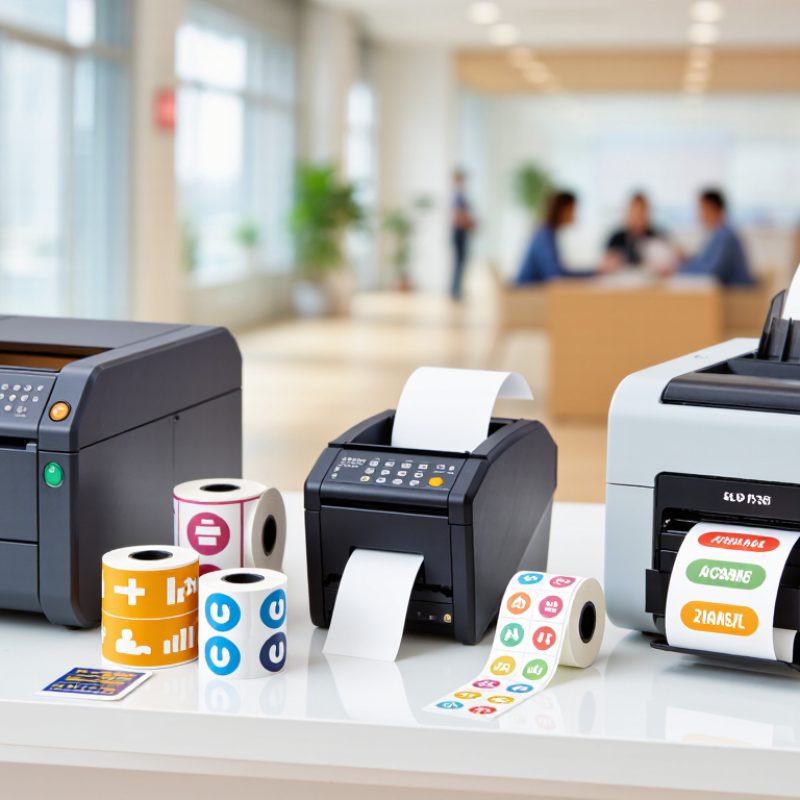
Thermal Printing Technology and Its Main Applications
Thermal printing forms images by applying controlled heat to coated paper or ribbon. Direct thermal printing darkens heat-sensitive stock, making it useful for receipts, queue tickets, and short-life shipping labels. Thermal transfer uses a heated printhead and ribbon to create more durable marks on product labels, asset tags, and healthcare identification. The distinction matters: a receipt left on a sunny dashboard can fade, while a correctly selected transfer label can withstand more handling. Small detail, big difference.
Grand View Research estimated the global thermal printing market at USD 4.9 billion in 2022 and projected a 5.2% compound annual growth rate from 2023 to 2030. Its market report reflects demand across retail, logistics, healthcare, and manufacturing. These settings value fast output and readable codes, especially when staff print labels beside packing lines or checkout counters. Still, market growth does not mean every thermal label suits every environment; heat, abrasion, and storage conditions can affect readability.
Tips: Match the media to the job. Test a sample label under real conditions, including sunlight, friction, and expected storage time. Check barcode contrast, too. A sharp print is not always a durable one.
How to Evaluate Thermal Printer Manufacturers in China
Evaluating a thermal printer manufacturer in China takes more than comparing quoted prices. Ask how the factory controls printhead alignment, platen pressure, and print temperature during production. Request a sample using your actual label stock, ribbon, and artwork. Inspect barcode readability, small text, edge sharpness, and consistency across several rolls. One sample is not enough. Test it yourself.
Ask for documented specifications, interface details, and firmware update procedures. Request reliability test reports that explain the test conditions, not just broad performance claims. Check whether replacement parts are available and how technical support handles faults. Details matter. If a supplier cannot explain how it tests print density or feed accuracy, seek clearer answers before placing an order.
Before committing, confirm production capacity and clarify who handles quality complaints. A video walkthrough can help, but it cannot replace an on-site or independent inspection when the order justifies one. Keep a scorecard for print quality, delivery consistency, support, and operating costs. Some checks may feel excessive. Skipping them can cost more.
Leading Chinese Thermal Printer Manufacturers for Global Buyers
Leading Chinese thermal printer manufacturers serve global buyers across retail, warehousing, logistics, and healthcare. Their offerings commonly include desktop receipt printers, industrial label printers, and mobile units. The right choice depends on daily print volume, media width, resolution, and operating environment. A warehouse printer facing dust and long shifts needs different protection from a checkout device used for short receipts. Small details matter.
Demand is supported by growing parcel activity. Pitney Bowes’ 2023 Parcel Shipping Index reported 161 billion parcels worldwide in 2022 and projected 256 billion by 2027. This creates practical demand for reliable label printing, but market growth alone does not prove a supplier’s quality. Global buyers should review factory quality controls, request samples, and test print clarity, feed accuracy, and connectivity with their own systems. Ask for documentation on supported media, maintenance, and spare parts, too. A low quoted price may look attractive, yet delayed components can cost more over time. I have seen specifications appear convincing on paper; real-world testing can still expose paper jams or unclear setup instructions. Compare service response times before placing a large order.
China’s Thermal Printer Manufacturing: Common Print Resolutions
Thermal printers commonly offer 203, 300, or 600 dpi print resolution. The chart shows the corresponding approximate dot density in dots per millimeter, calculated using 25.4 mm per inch.
Comparing Product Types, Capabilities, and Certifications
China’s thermal printer manufacturers serve distinct needs, so product type matters more than a broad catalog. Direct thermal models suit short-lived labels and receipts; thermal transfer machines use ribbons for more durable barcode labels. Mobile printers add battery-powered convenience, while industrial units handle wider media and sustained production. Small details matter: test the actual label stock, print darkness, cutter, and connection interface before ordering. A demo is useful.
Grand View Research estimated the global thermal printing market at about US$4.9 billion in 2023, with growth projected through 2030. That estimate signals demand, not equal capability among suppliers. Ask manufacturers for resolution, print speed, supported media width, and printhead-life test conditions. A speed figure alone can mislead; real output depends on label size and print density. Easy to miss.
Certifications should match the destination market and the exact printer configuration. Request current test reports for applicable safety and electromagnetic-compatibility requirements, plus material documentation where relevant. ISO 9001 concerns a company’s quality-management system; it does not certify a printer’s performance. Check the issuing body and model number, not just a logo on a brochure. I would also ask how firmware updates and replacement parts are handled. That part is often vague.
Sourcing, Quality Control, and Export Considerations
For global buyers, sourcing a thermal printer is about more than unit price. Grand View Research estimated the global thermal printer market at USD 4.9 billion in 2023, with projected growth through 2030. That expansion makes supplier checks more important, not less. Request component specifications, production capacity, and a sample printed on the label stock you actually use. Check barcode clarity, print alignment, cutter performance, and interface stability across repeated runs. Ask how defects are recorded and corrected. A polished sample is not enough.
Quality control should match the working environment. Test printers with the intended paper width, roll core, and operating temperature. Confirm that firmware, manuals, and spare-part lists match the shipped configuration. Small inconsistencies matter. UNCTAD’s Review of Maritime Transport 2024 reports that shipping carries over 80% of global merchandise trade by volume, so packaging and documentation deserve equal attention. Agree on carton protection, pallet markings, and export documents before production. A final inspection report should identify sample size, test results, and any exceptions—not just say “passed.” No checklist catches everything. Buyers should also leave room to revise specifications after field testing; that step is often delayed, and sometimes for good reason.