Call for Price: 0086-15515573212
Choosing the right Sleeve Pallets can influence freight cost, warehouse safety, and delivery reliability. Global shipping adds more pressure. Pallets must survive lifting, stacking, humidity, vibration, and repeated handling. A strong design may still fail when dimensions waste container space. Small details matter.
This guide examines seven practical Sleeve Pallets for international supply chains. Each option is assessed through load capacity, sleeve strength, collapsibility, repairability, and storage efficiency. We also consider forklift entry, pallet stability, and protection around carton corners. In real warehouse conditions, a pallet can meet its rated load yet perform poorly on uneven floors. That difference deserves attention.
Reliable selection also requires documented testing and clear supplier specifications. Buyers should verify dynamic and static load ratings, material composition, treatment records, and compatibility with their shipping lanes. Wooden components may require compliant treatment and marking under applicable import requirements. Plastic and composite models can reduce moisture concerns, but they are not automatically better. They may cost more or create recycling challenges. No single model wins everywhere.
Our shortlist is useful, not perfect. Product availability, carrier policies, and destination rules can change. Measure your cartons carefully. Test loaded units before committing to a large order. The best Sleeve Pallets will balance protection, handling speed, total landed cost, and responsible end-of-life planning. That balance is less impressive than a bold claim, but usually more valuable.
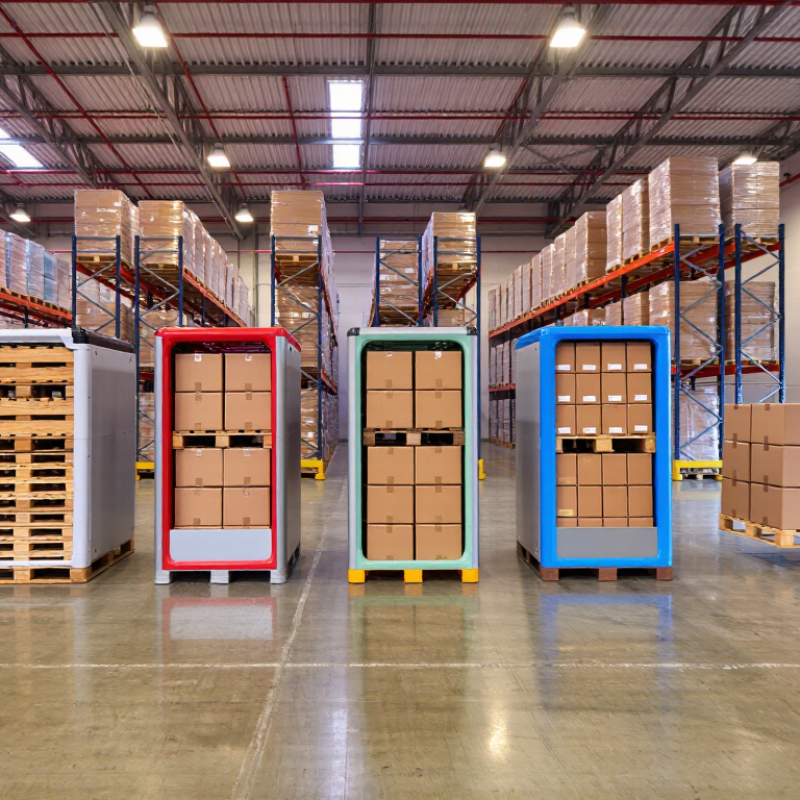
Sleeve pallets combine a load base with a removable protective sleeve. This design saves space when empty. It also supports faster inspection and product access. ISO 6780 focuses on principal pallet dimensions and tolerances, not every sleeve feature. Common footprints include 1200 × 800 mm, 1200 × 1000 mm, and 1219 × 1016 mm. Other recognized sizes include 1140 × 1140 mm, 1100 × 1100 mm, and 1067 × 1067 mm. Select a footprint that matches containers, racks, forklifts, and regional handling equipment.
Material changes performance. Heat-treated wood offers repairability and broad availability. Plastic resists moisture and repeated washing. Metal handles severe loads but adds weight. Composite designs can reduce weight, although their repair options may be limited.
A sleeve pallet’s load rating needs careful reading. Static, dynamic, and racking capacities are different values. ISO 6780 does not automatically guarantee any of them. Testing should reflect the actual load, stacking pattern, temperature, and support points.
A practical inspection starts with a loaded prototype. Check sleeve fit, base deflection, fork entry, and corner damage. Small gaps matter. During transport, uneven cartons can shift and create pressure on the sleeve walls. I would not choose the highest advertised rating without test evidence. That approach sounds efficient, but it can miss real warehouse conditions. Review drawings, test reports, repair procedures, and empty-stack dimensions before comparing seven candidate pallets.
The seven best sleeve pallet choices for global shipping balance compliance, strength, and cube efficiency.
Heat-treated hardwood remains practical for heavy cargo and must carry a visible ISPM 15 mark. The FAO’s ISPM 15 standard requires approved treatment for solid wood packaging moving internationally. Plywood and presswood options reduce pest concerns, but their load ratings need verification. Reusable plastic sleeves resist moisture and provide cleaner handling. Nestable designs save warehouse space. Rackable, four-way-entry pallets improve forklift access. Lightweight two-way pallets can work for stable, low-density freight.
The GMA 48×40-inch footprint remains a reliable North American reference. It supports common warehouse racking and trailer layouts.
However, a 48×40 pallet may waste space in narrower export containers. ISO 668 defines standard container dimensions, while actual internal widths vary by equipment and manufacturer. A standard 40-foot container usually offers about 2.35 meters of internal width. Door clearance can be tighter. Small design errors become expensive quickly.
Tips: Confirm the loaded sleeve pallet’s height, weight, and entry direction before booking space. Check ISPM 15 records, treatment stamps, and supplier test reports. Use corner protection when sleeves hold shifting cartons. A trial load is worth the effort. I have seen “container-ready” pallets fail because the sleeve thickness was ignored. Perfect fit is uncommon. Recheck measurements after loading.
Choosing a sleeve pallet depends on load capacity, landed cost, and reuse cycles. UNCTAD reports that ships carry over 80% of global merchandise trade by volume. Pallets must survive handling, moisture, and long transit delays. Corrugated paper sleeves are light, recyclable, and usually support 300–600 kilograms. Honeycomb paper systems offer similar handling, but better edge strength. Both often cost about US$8–20 per unit and suit limited reuse. Plywood pallets carry roughly 700–1,200 kilograms, with moderate repairability and costs near US$18–35. Solid-wood pallets remain practical for heavy cargo. They commonly carry 1,000–2,000 kilograms and cost US$20–45, depending on treatment and timber supply.
Molded plastic sleeve pallets provide cleaner surfaces and about 1,000–2,500 kilograms of static capacity. Their typical cost is US$35–90, but they may complete 20 or more trips. Steel pallets handle approximately 2,000–5,000 kilograms and resist impact, although costs can exceed US$100. Aluminum versions weigh less than steel and resist corrosion, but often cost US$150–300. RPA guidance commonly treats reusable packaging as a multi-trip system, with ten trips frequently used as a practical benchmark. That benchmark is useful, not universal.
Eurostat reported 188.7 kilograms of packaging waste per European resident in 2021. Reuse deserves serious attention. My field preference is plastic for stable return lanes, wood for irregular exports, and paper for one-way shipments. This ranking is imperfect. Empty-return distance, repair rates, and warehouse humidity can reverse it. ISO 6780 dimensions, especially 1,200 × 1,000 millimeters, still need checking against container floors and forklifts.
Sleeve pallets work best when their design matches the destination market. In Europe, reusable plastic, nestable, and rackable sleeve pallets suit automated warehouses and return networks. Export plywood pallets remain practical for one-way shipments because they are stable, repairable, and widely accepted. Cardboard sleeve pallets offer lower weight, but moisture can quickly weaken them.
North American routes often favor heavy-duty plastic, hybrid wood-plastic, and reinforced export pallets. These options handle long inland distances, mixed handling, and warehouse racking. In Asia, lightweight plastic and collapsible sleeve pallets can reduce container volume, especially where return logistics are limited. However, local handling equipment varies considerably. A pallet that fits one port may perform poorly at another.
Australia often requires careful attention to timber treatment, moisture protection, and inspection procedures. Certified timber sleeves may work well, while plastic designs simplify repeated international use.
Tips: Check load ratings in real conditions, not only on paper. Measure forklift openings. Confirm pallet dimensions with the receiving warehouse. Add corner protection for tall cartons.
We once underestimated humidity, and the outer sleeve softened before unloading. That mistake was avoidable. Also, “global” does not mean universal; regional testing, documentation, and operator feedback still matter.
Choosing among seven sleeve pallet designs requires more than checking dimensions and price. Safety, weight, and carbon impact should guide the decision. A reinforced timber base offers strong load support, while recycled plastic, pressed-fiber, and lightweight composite bases can reduce tare weight. Folding sleeves also save return space.
EUMOS 40509 is a useful reference for assessing load-unit stability during transport. It helps evaluate whether cartons shift under horizontal forces, such as braking or cornering. A practical trial should use the intended pallet pattern, wrapping method, and load height. Test the heaviest realistic shipment, not only an ideal sample. That detail matters. A stable load reduces product damage and handling risks, but EUMOS testing does not replace route-specific engineering. Humidity can weaken fiber materials. Uneven floors can expose weaknesses.
Weight directly affects freight emissions, especially on long road and air routes. However, the lightest pallet is not automatically the most sustainable choice. Compare manufacturing emissions, reuse cycles, repair rates, and end-of-life recovery. A heavier reusable pallet may outperform a lighter disposable option after several trips. Calculate CO₂ per delivered trip, not per pallet alone. Include empty-return distance and cleaning energy. Data may remain imperfect. Supplier estimates often use different boundaries, making comparisons difficult. Record pallet mass, trips completed, damage incidents, and disposal results in one shared worksheet. Small measurement errors can change the ranking.