What Are the 2026 Top Types of Pre Printed Barcode Labels?
What Are the 2026 Top Types of pre printed barcode labels?
In 2026, pre printed barcode labels will support faster identification, cleaner shelves, and more dependable inventory control. However, the best label depends on the product, scanner, surface, and supply chain conditions. A frozen carton needs different protection than a retail package.
GS1 CEO Miguel Lopera once described the barcode as “a common language for business.” That idea remains practical. UPC-A and EAN-13 labels will continue serving everyday retail products. Code 128 and GS1-128 will remain important for cartons, pallets, and logistics data. Data Matrix and QR-based labels will gain attention where space is limited or digital product information matters.
The details matter.
A warehouse label may face dust, abrasion, moisture, or uneven cardboard. A pharmacy label may require sharp contrast and consistent placement. Direct thermal printing can suit short-term use, while thermal transfer materials often provide stronger durability. Pre printed barcode labels can also include static branding, warning text, product names, or serialized areas for later printing.
This overview examines the leading label types expected in 2026. It also considers adhesive performance, barcode verification, print contrast, material selection, and scanning distance. These factors are easy to overlook. They can still decide whether a label works at the checkout or fails on a busy loading dock.
Some predictions remain uncertain. Adoption will vary by industry, region, and software readiness. A newer 2D barcode is not automatically better. Reliable implementation usually matters more than novelty.
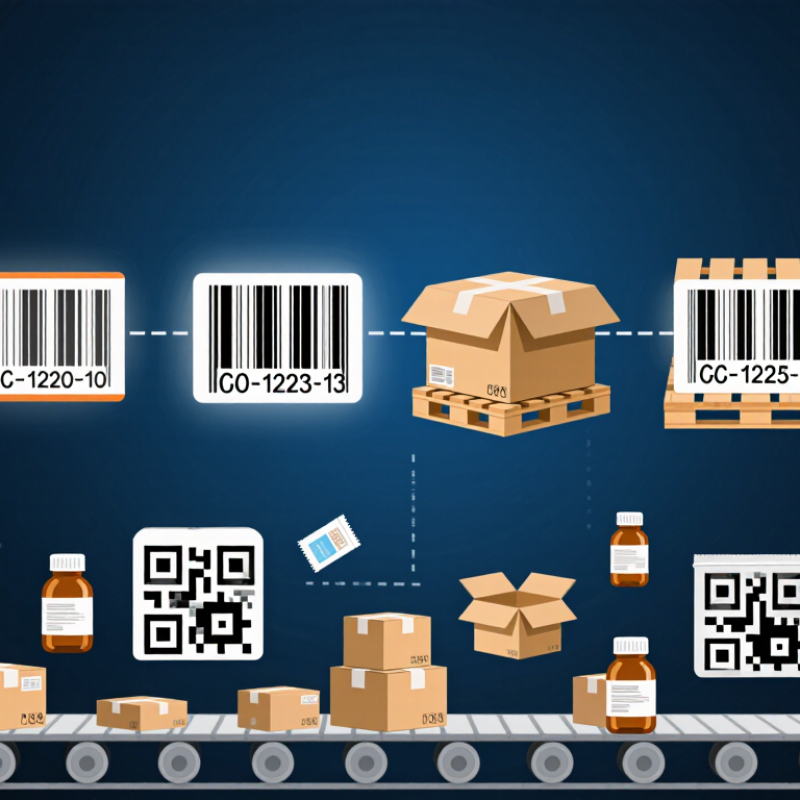
What Are Pre-Printed Barcode Labels and How Do They Work?
Pre-printed barcode labels contain fixed information, such as product codes, storage locations, or handling instructions. Unlike blank labels, they arrive with the barcode already printed. A printer may later add dates, quantities, or serial numbers. The scanner reads the dark bars or square modules, converts them into digital characters, and sends the result to inventory software. GS1 reports that barcode systems support approximately six billion scans worldwide each day. That scale matters.
For 2026, common formats include Code 128, EAN/UPC, QR Code, and Data Matrix. Code 128 suits cartons and logistics because it stores many characters in limited space. EAN/UPC remains useful for retail identification. QR Code supports web links and extended product information. Data Matrix performs well on small components. Sequential labels add unique numbers for traceability. Still, choosing a symbol by popularity is a mistake.
Material choice affects performance. Direct thermal labels work well for short-term shipping, while thermal-transfer labels resist abrasion and heat. In practice, I check contrast, quiet zones, adhesive strength, and surface curvature before approving a run. ISO/IEC 15416 evaluates linear barcode quality through contrast, modulation, defects, and decodability. A 2025 GS1 specifications update also stresses consistent dimensions and data structure. I have seen beautiful labels fail because glossy packaging reflected scanner light. That assumption was imperfect. Good labels need testing.
Which Barcode Label Types Are Leading in 2026?
Which Barcode Label Types Are Leading in 2026?
Pre-printed barcode labels are becoming more specialized across warehouses, clinics, stores, and manufacturing sites. Two-dimensional labels, including QR and Data Matrix formats, lead many new projects. They hold more information than traditional linear barcodes. A small label can connect an item with a lot number, location, or inspection record. Still, more data does not guarantee better scanning. Poor contrast and damaged edges remain common problems.
Thermal transfer labels remain strong where long-term readability matters. They suit cartons, equipment, outdoor containers, and products exposed to heat or moisture. Direct thermal labels continue to serve short-life applications, such as shipping, receipts, and temporary inventory tags. Linerless labels are also gaining attention because they reduce backing waste and support flexible label lengths. They can be efficient, but dispensing equipment must be properly adjusted.
Material choice is becoming just as important as barcode format. Polyester and synthetic stocks often perform better on curved surfaces or in cold storage. Paper remains practical for controlled indoor environments. In production reviews, I have seen teams select a barcode first and the label material later. That approach can fail. A reliable specification should check scanner distance, surface texture, exposure time, print contrast, and verification results. Quiet details matter. Pre-printing also helps keep logos, warning fields, and fixed product information consistent, while variable data can be added during packing.
Where Are the Top Pre-Printed Barcode Labels Used?
What Are the 2026 Top Types of Pre Printed Barcode Labels?
Pre-printed barcode labels are used wherever repeated identification must remain quick and consistent. Retail stores place them on shelf edges, price cards, cartons, and return bins. Warehouses use them on rack locations, pallets, storage totes, and picking zones. A clear location code can save seconds during every scan.
Manufacturing sites apply these labels to parts, work-in-progress containers, and finished packages. Healthcare facilities may use them for approved inventory, laboratory containers, and internal records. Shipping departments place fixed-data barcodes on cartons, pallets, and handling units. These labels work best when the printed information rarely changes. Variable data still needs a reliable on-demand printing process.
A common production lesson is simple: attractive labels can still fail. Small text, weak contrast, curved surfaces, dust, or poor adhesive selection may reduce scanning accuracy. I have seen teams focus on barcode type while overlooking the label’s actual environment. That mistake is easy to repeat. The surface matters.
Tips: Test labels on the real material before ordering in bulk. Check scanner distance, lighting, moisture, abrasion, and storage temperature. Keep quiet zones clear around every barcode. Review placement with the people who scan labels daily. Their practical feedback may reveal problems that design software misses. Even a minor placement change can improve workflow reliability.
How Can Businesses Select the Right Barcode Label Type?
Choosing the right pre-printed barcode label starts with the working environment, not the label’s appearance. Paper labels suit clean, short-term indoor use and moderate handling. Direct thermal labels are convenient for temporary shipping or shelf identification, but heat and sunlight can darken them. Thermal transfer labels offer stronger image stability for longer storage. Polypropylene or polyester materials perform better around moisture, abrasion, and frequent handling.
The barcode type also matters. Code 128 supports compact product and shipment data. QR codes hold more information and scan easily from phones or fixed readers. Retail operations may prefer compact symbols, while warehouses often need larger barcodes with quiet zones. Select the symbology required by your software, scanners, and trading partners. A beautiful label fails if the reader cannot decode it.
Test samples on the actual surface. Corrugated cartons, curved containers, and dusty bins reflect light differently. Check print contrast, adhesive strength, label size, and scanner distance. Use a verifier when possible, and review the ANSI or ISO/IEC quality grade. Field checks often expose overlooked problems, such as tiny text or peeling corners. I have found that choosing the cheapest material can create more rework later. Still, not every operation needs premium stock. A small pilot run may reveal that assumption. Record temperature, storage time, handling frequency, and scan results before approving a large order.
What Are the 2026 Top Types of Pre-Printed Barcode Labels?
Fixed-length retail and logistics identifiers are compared by the number of numeric digits defined by their standard. UPC-A contains 12 digits, EAN-13 contains 13 digits, and ITF-14 contains 14 digits. Code 128 and GS1 DataMatrix support variable-length data, making them better choices when labels must carry batch numbers, serial numbers, dates, or other application identifiers. Businesses should select the barcode type based on data length, scanning environment, label size, and required compatibility.