Call for Price: 0086-15515573212
Choosing among the 2026 top FIBC bag manufacturers requires more than comparing prices or glossy product photos. Global buyers need dependable packaging, verified production capacity, and evidence of consistent quality. This guide examines manufacturers through practical buyer concerns, including bag design, fabric strength, stitching accuracy, loading safety, and delivery performance.
A capable Fibc Bags Manufacturer should understand the handling conditions behind every order. A one-ton bag for mineral powder faces different demands than a ventilated bag for agricultural goods. Fabric weight, liner selection, lifting loops, discharge spouts, and moisture protection can affect performance in storage and transit. Reliable suppliers should provide clear specifications, inspection records, test reports, and traceable batch information. Certifications matter, but they should support real processes rather than replace them.
Look closely at factory experience. Review sample quality, communication speed, complaint handling, and production controls. Ask how the supplier manages repeated orders, urgent changes, and export documentation. Third-party testing can help verify safe working loads, seam strength, and material consistency. No supplier is perfect. Some claims sound stronger than the available evidence, and buyers should question vague language. A manufacturer may offer excellent bags but weak after-sales support. Another may provide attractive pricing but limited customization. The strongest choices balance technical expertise, transparent evidence, responsible sourcing, and practical reliability. This introduction prepares global buyers to compare leading FIBC producers with greater confidence, while recognizing that final suitability depends on the product, destination, regulations, and handling environment.
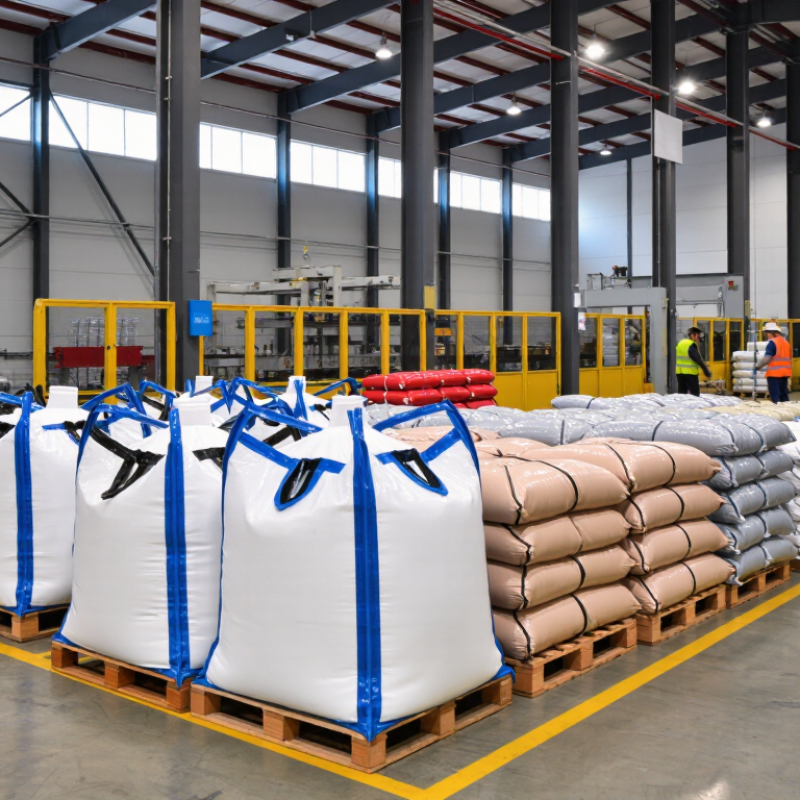
FIBC bags are flexible intermediate bulk containers made mainly from woven polypropylene. They hold dry products such as grains, powders, minerals, and plastic pellets. A typical bag carries 500 to 2,000 kilograms, depending on its design and safety factor. Four lifting loops allow forklifts, cranes, or warehouse frames to move the loaded container. Some models include liners, coated fabric, filling inlets, or discharge spouts.
Global buyers use FIBCs because they reduce packaging volume during transport and storage. Empty bags arrive folded in compact bundles, saving valuable container space. Their square shape also uses warehouse floors more efficiently than many small sacks. A liner can help protect moisture-sensitive materials, while a coated surface may reduce dust leakage. Buyers should still verify seal quality and material compatibility. “Food grade” alone does not answer every handling question.
In practical purchasing, specifications matter more than appearance. Confirm safe working load, fabric strength, loop configuration, bag dimensions, and filling method. Static-control designs may be necessary in sensitive industrial environments. Moisture, humidity, and repeated handling can change performance. Third-party inspection, production samples, and batch records provide useful evidence. However, testing cannot replace careful site evaluation. A bag that works well in one facility may fail when filled differently or lifted with unsuitable equipment. Even experienced buyers sometimes overlook discharge speed or pallet stability. That small oversight can create delays, spilled material, and avoidable waste.
Flexible Intermediate Bulk Containers (FIBCs), also called bulk bags or jumbo bags, are woven polypropylene containers designed to store and transport dry, flowable materials. Common applications include chemicals, food ingredients, minerals, agricultural products, pharmaceuticals, and construction materials.
Typical FIBC rated capacities: FIBCs are commonly specified with safe working loads from approximately 500 kg to 2,000 kg. The actual capacity depends on the bag construction, dimensions, lifting design, filling and discharge system, material density, and required safety factor. Global buyers use FIBCs because they provide high-volume handling, efficient warehouse storage, flexible transport, and reduced packaging waste compared with many smaller sacks.
How to Evaluate FIBC Bag Manufacturers in 2026
Global buyers should evaluate FIBC bag manufacturers through evidence, not polished websites. Request factory audit records, production photographs, and current quality certificates. Confirm whether certificates match the actual manufacturing site and product scope.
A capable manufacturer should explain Safe Working Load, safety factors, fabric weight, and lifting-loop design clearly. Ask for samples with the same specification as your planned order. Inspect seam consistency, loop attachment, liner fit, discharge spout closure, and printed markings. A small defect can become a serious handling problem.
Ask for batch records, raw-material traceability, and test reports from qualified laboratories. Useful tests may include tensile strength, drop performance, UV resistance, and electrostatic control when relevant. Discuss storage conditions too. Bags kept beside rain or direct sunlight may deteriorate before shipment.
Production communication matters. Can the team answer technical questions without vague promises? Can it provide corrective-action records after a failed inspection? In practical sourcing, a pre-shipment inspection is valuable, but it cannot replace factory controls. That assumption deserves caution.
Request a pilot order before committing to large volumes. Measure dimensions, filling performance, stacking stability, and unloading speed at your facility. The cheapest quotation may exclude liners, testing, packaging, or replacement support. Compare the full delivered cost instead. Keep written specifications, approved samples, and inspection limits in one controlled file. Mistakes still happen, but unclear records make them harder to correct.
2026 Top FIBC Bag Manufacturers for Global Buyers
Leading FIBC Bag Manufacturers by Region and Specialty
Global FIBC production is concentrated in Asia-Pacific, where large converters support construction, agriculture, minerals, and food packaging. Grand View Research reported that the global FIBC market exceeded USD 7 billion in 2023, with steady growth expected through 2030. Regional manufacturers in China, India, and Southeast Asia often compete through volume, shorter lead times, and flexible customization. Buyers should inspect fabric weight, seam strength, moisture barriers, and loading tests rather than relying on price alone.
European manufacturers usually emphasize traceability, clean production, and specialized food or pharmaceutical packaging. Manufacturers in Germany, Italy, Poland, and neighboring markets commonly offer antistatic designs, certified cleanroom handling, and controlled printing. North American suppliers often focus on bulk agricultural products, building materials, and closed-loop logistics. The Freedonia Group has identified continued demand for bulk bags as companies reduce pallet use and improve material handling efficiency. Practical experience shows that woven polypropylene quality can vary between batches. Ask for recent test reports.
Specialty production matters most when the filling line is demanding. Conductive or antistatic bags suit sensitive industrial environments, while coated bags protect hygroscopic powders from moisture. Four-loop construction can improve forklift handling, but lifting height and safe working load must match site equipment. ISO 21898 compliance, food-contact documentation, and third-party inspection strengthen supplier credibility. A perfect specification sheet is not enough; sample filling trials often reveal overlooked issues.
| Region | Key Manufacturing Strength | Common FIBC Specialties | Typical Safe Working Load | Typical Construction Options | Common Buyer Applications | Important Compliance Requirements |
|---|---|---|---|---|---|---|
| East Asia | Large-scale woven polypropylene production, broad export capacity, and extensive customization capability | Standard U-panel bags, circular bags, Baffled FIBCs, conductive bags, food-grade bags | 500–2,000 kg | Coated or uncoated polypropylene fabric; 4-loop, 2-loop, and cross-corner loop designs | Minerals, chemicals, plastics, agriculture, construction materials | ISO 21898, food-contact documentation where applicable, UN certification for dangerous goods |
| South Asia | Competitive production costs, flexible order quantities, and strong capability in customized industrial packaging | Pharmaceutical-grade bags, sift-proof bags, ventilated bags, Type C conductive bags | 500–2,000 kg | Laminated fabric, liner inserts, dust-proof seams, printed panels, specialized discharge spouts | Pharmaceutical ingredients, food additives, cement, grains, powders | ISO 21898, GMP-related documentation for pharmaceutical use, HACCP or equivalent food-safety controls |
| Southeast Asia | Strong supply of polypropylene products, export-oriented production, and experience with agricultural packaging | Ventilated FIBCs, food-grade bags, duffle-top bags, container liner systems | 500–1,500 kg | Breathable fabric, UV-stabilized material, inner liners, standard lifting loops | Rice, coffee, cocoa, feed, starch, agricultural commodities | Food-contact compliance, UV-resistance specifications, ISO 21898, export packaging requirements |
| Europe | Advanced technical production, strict quality control, specialized safety designs, and short regional supply chains | Type C and Type D antistatic bags, UN-certified bags, pharmaceutical and cleanroom FIBCs | 500–2,000 kg | Static-control fabric, conductive threads, validated liners, high-strength lifting systems | Hazardous chemicals, pharmaceuticals, fine powders, specialty minerals | ISO 21898, IEC 61340-related static-control practices, UN regulations where required, EU food-contact rules |
| Middle East | Regional supply for petrochemical, mineral, cement, and construction-material industries | Heavy-duty bags, conductive FIBCs, anti-static bags, moisture-resistant bags | 1,000–2,000 kg | High-denier fabric, coated surfaces, dust-proof seams, UV-resistant materials | Polymer resin, petrochemicals, cement, gypsum, minerals | ISO 21898, UN certification for regulated materials, static-control specifications for flammable powders |
| North America | Strong demand for engineered bulk packaging, food-grade systems, and supply programs for industrial users | Baffled FIBCs, food-grade bags, sift-proof bags, bulk bags with liners and discharge systems | 500–2,000 kg | High-strength seams, polyethylene liners, optimized pallet dimensions, custom inlet and outlet designs | Food ingredients, chemicals, plastics, animal feed, pharmaceuticals | ISO 21898, FDA food-contact requirements where applicable, UN certification, documented traceability |
| Latin America | Agricultural and mining-oriented production with growing demand for regional sourcing | Agricultural FIBCs, ventilated bags, standard four-loop bags, moisture-resistant bags | 500–1,500 kg | UV-stabilized fabric, coated or laminated fabric, reinforced seams, simple discharge outlets | Coffee, sugar, grains, fertilizers, minerals, animal feed | ISO 21898, food-contact requirements, UV testing for outdoor storage, local import regulations |
| Africa | Demand driven by mining, agriculture, food processing, and infrastructure development | Heavy-duty mineral bags, agricultural bags, ventilated bags, fertilizer and chemical FIBCs | 500–2,000 kg | UV-resistant fabric, reinforced lifting loops, coated fabric, dust-proof and moisture-resistant options | Minerals, fertilizers, grains, cocoa, coffee, construction materials | ISO 21898, UN requirements for dangerous goods, UV performance specifications, food-safety documentation |
Reliable FIBC sourcing begins with verifiable documents, not attractive catalog images. Buyers should request the manufacturer’s quality certification, factory address, and current audit scope. ISO 9001 supports consistent production controls, while ISO 21898 relates specifically to flexible intermediate bulk containers. Certification dates matter. Expired documents create avoidable risks.
Testing should match the bag’s intended load, filling method, and transport conditions. Common checks include safe working load, safety factor, seam strength, lifting loop performance, drop resistance, and ultraviolet exposure. Antistatic performance may require additional testing in controlled environments. Food-contact applications need suitable declarations and migration reports for the destination market.
Ask for batch numbers, laboratory reports, inspection records, and a certificate of conformity. Samples should be measured, weighed, and visually inspected before shipment. Small details matter, such as loop stitching, liner fit, discharge spout dimensions, and label accuracy. A certificate alone is not proof of every production batch. That assumption is easy to make.
International compliance is rarely identical across countries. Importers should confirm packaging, labeling, recycling, and material requirements with local specialists. Manufacturers should explain limitations instead of promising universal approval. This may slow purchasing decisions. It can prevent expensive rework, rejected cargo, or unclear responsibility after delivery.
Comparing FIBC prices requires more than checking the quoted unit cost. A credible supplier should separate fabric grade, safe working load, safety factor, coating, liner, stitching, and printing. ISO 21898 defines performance requirements for flexible intermediate bulk containers, helping buyers compare like-for-like specifications. A lower quote may hide thinner fabric or weaker lifting loops. That mistake becomes expensive quickly.
Production capacity needs evidence, not confident claims. Ask for monthly output, active looms, inspection staffing, and recent delivery records. The 2024 Smithers packaging market analysis identifies industrial packaging demand as closely linked to manufacturing and logistics activity. Capacity can therefore tighten during seasonal peaks. Request a capacity statement for your exact construction, not the factory’s total annual figure. It is a small but important distinction.
Supply terms should show the full landed-cost picture. Compare EXW, FOB, and delivered pricing, then add freight, insurance, duties, testing, and payment fees. The World Bank’s 2023 Logistics Performance Index evaluates customs, infrastructure, and timeliness on a one-to-five scale. Use those indicators when judging a production location and route. Require a sample approval schedule, inspection point, acceptable defect level, and replacement process. Incoterms matter. So does timing. I have seen buyers compare prices correctly, yet overlook a six-week production queue. The cheapest offer is not always the most reliable one.